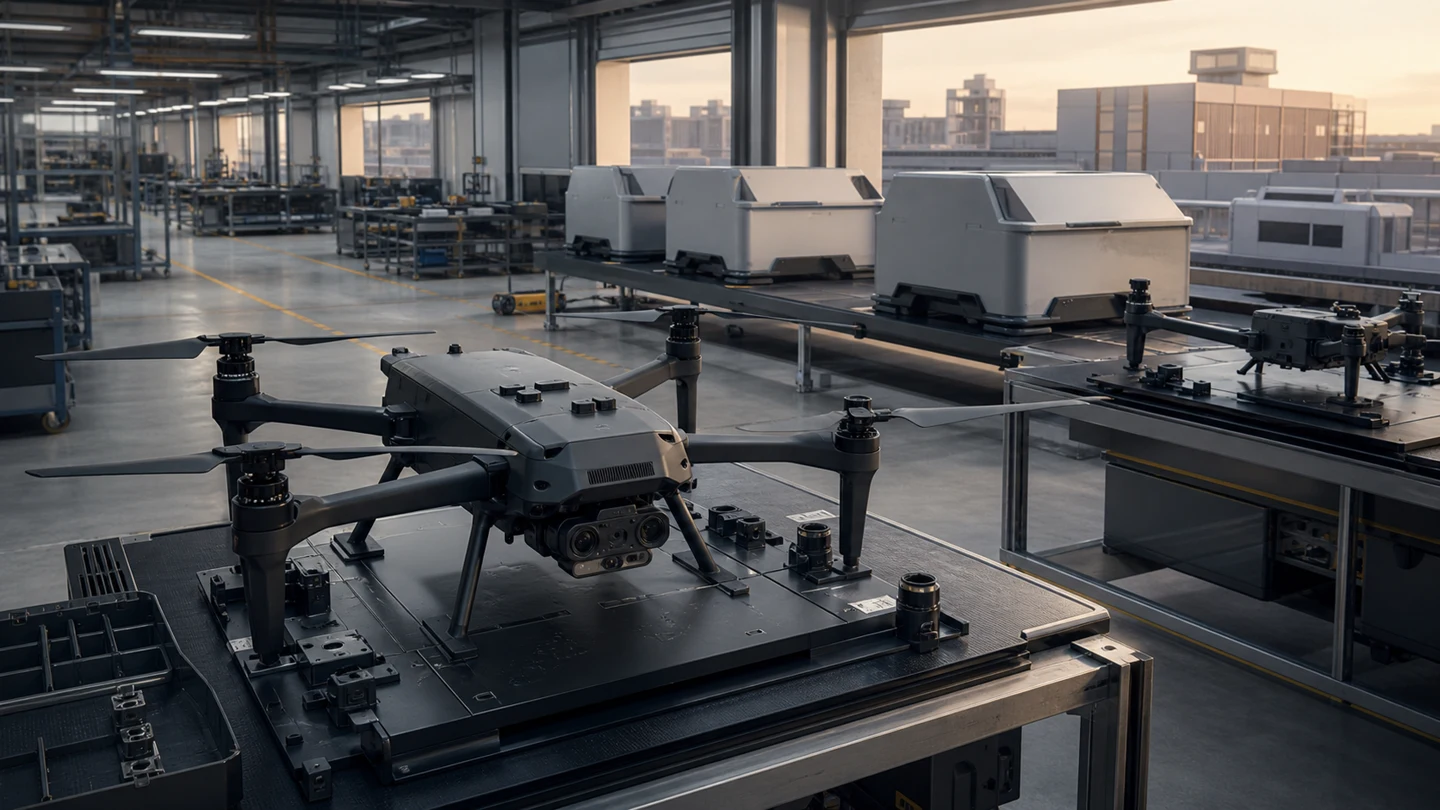
The capital is aimed at production capacity
BRINC said on July 14 that it raised $125 million in a financing round led by Motorola Solutions, with Index Ventures and Dylan Field participating. The company plans to use the money for domestic manufacturing, product development and sales, including a move by year-end into a factory three times the size of its current facility. Bloomberg independently confirmed the round and reported that BRINC did not disclose its valuation.[1,2]
BRINC also said 2025 revenue more than tripled, monthly production capacity increased fivefold and its year-to-date count of signed 911-response-drone contracts was nearly four times the comparable 2025 count. Those growth measures are company-reported. The announcement provides no revenue, unit output, contract count, backlog, round structure or delivery schedule.[1,2]
Approved programs are not the same as operating scale
Local evidence shows demand but also the implementation gap. St. Louis approved a six-drone BRINC purchase in May. Spectrum News reported at the vote that the program was not yet operating and that policy, funding and public-perception questions remained. St. Louis Magazine separately reported an expected annual program cost of about $360,000, initially covered by private donations.[3,4]
A contrary public record comes from Laredo, Texas. Its council rescinded a BRINC purchase in November 2025, saying the company had been slow to roll out all ordered drone stations, and authorized a five-year Axon contract worth $3.45 million. One cancellation does not establish BRINC's overall performance, but it identifies delivery execution as a material test for the new capital.[1,5,6]
The next measurable catalyst is the factory move, followed by disclosed unit output, on-time deliveries and live municipal operating results. Until those appear, the round demonstrates investor backing and a plan to expand capacity—not scaled deployment reliability or verified economics.[1,2,4,5,6]