The 2027 restriction already exists
The July 20 executive order does not create a new January 2027 magnet ban. The current DFARS restriction says that, from January 1, 2027, covered material may not be mined, refined, separated, melted or produced in a covered country, and it extends the neodymium-iron-boron, or NdFeB, magnet restriction from mining neodymium, iron and boron through finished-magnet production. The order is therefore best read as an attempt to make an existing sourcing rule more operationally enforceable, rather than evidence of a new domestic magnet award or a deployed robotics program.[1,2]
The new burden is mitigation and mapping
Starting January 1, the order says service secretaries should generally stop issuing waivers under 10 U.S.C. 4872 unless a contractor provides an accepted mitigation plan. That plan must identify the noncompliant source, document exhaustive efforts to find a compliant source or show nonavailability, and set a timeline for removing the material. A contractor's failure to qualify a domestic source is not itself nonavailability unless it shows active, adequately funded and ongoing qualification efforts. This makes provenance and qualification a contract-administration problem, not just a purchasing preference.[1,4]
Within 180 days, the Department of War is directed to develop policy and guidance for mapping critical supply chains for acquisitions it determines support, implicate or relate to national security. Implementing regulations are due within 90 days after that work. The proposed rules would call for an indentured bill of materials that traces components, parts, equipment, software and materials back to raw-material origin, alongside supplier vetting for financial, foreign-ownership, manufacturing and supply risks. Those are future regulations, not a current universal reporting deadline for every contractor.[1,5]
Why robotics components are in scope, but no result is named
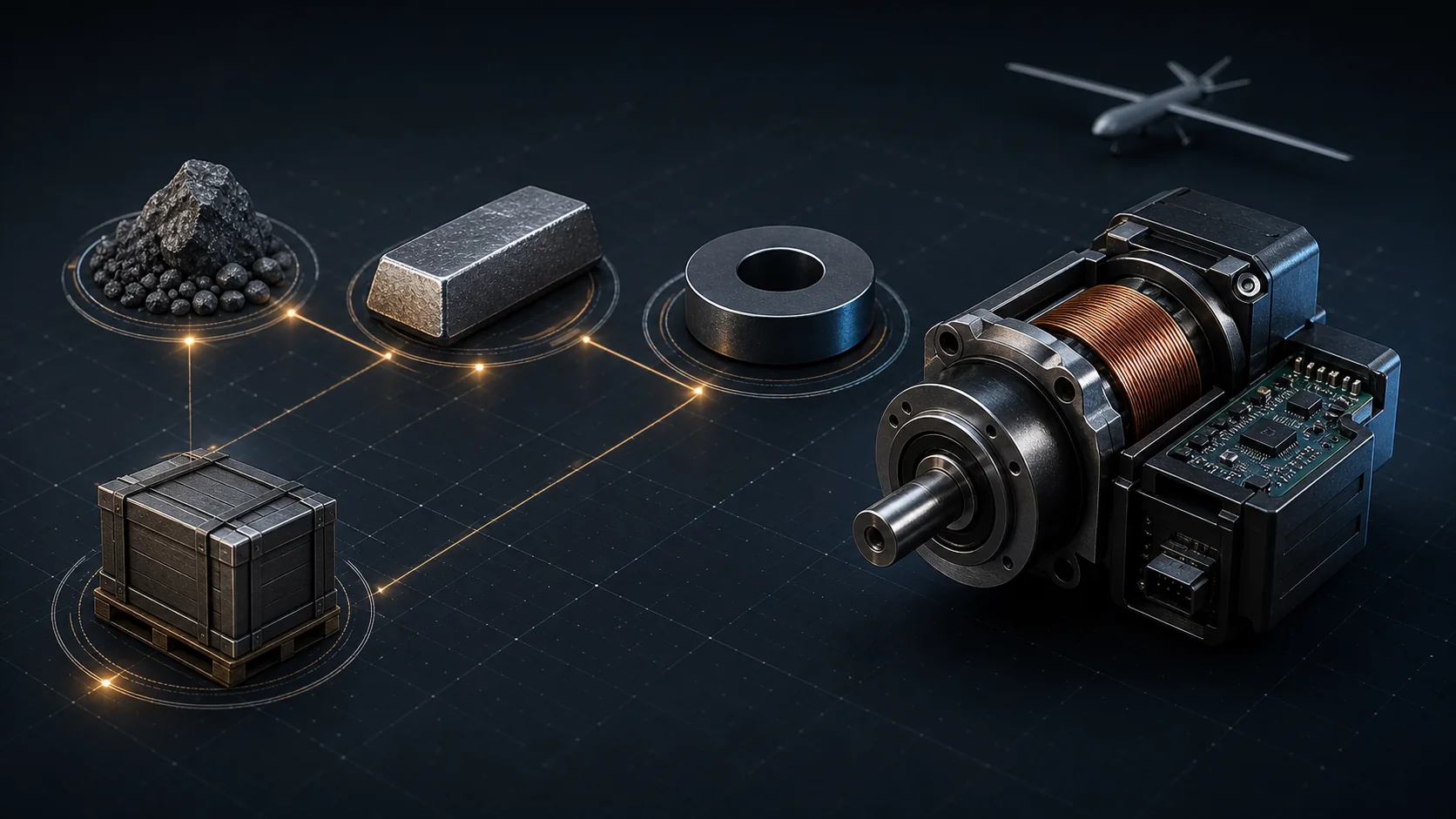
The link to physical systems is real but indirect. MP Materials' latest annual filing says neodymium-praseodymium is used in NdFeB permanent magnets for electric machines including drones and robotics. That makes upstream magnet provenance relevant to motors and actuators used in defense robots and uncrewed systems. It does not establish that a named robot maker, motor supplier or fielded system has lost access to material, faced a waiver denial or qualified an alternative source. The order identifies no such company, contract, cost or enforcement outcome.[1,3]
For selected existing acquisitions, the order tells the Secretary to initiate regulatory action to identify programs that rely on an unreliable foreign supplier and require contractors to qualify and use an alternative when one is available. Failure could be grounds, consistent with law and existing terms, to consider suspending or terminating task orders, declining options or terminating a contract. That is a possible remedy after program selection and failed qualification, not an instruction to terminate a contract now. The order also retains exceptions and directs a review of the electronic-device exemption.[1,4]
The first real test is a contract record
The decision delta is narrow but actionable: an existing material restriction is moving toward documentation, vetting and qualification workflows that reach beyond a final magnet supplier. The next evidence worth tracking is the 180-day mapping guidance, the regulations due 90 days later, a named acquisition, an accepted mitigation plan or a disclosed alternative-source qualification. Until one of those records appears, the source set supports a changing compliance burden for defense supply chains, not a demonstrated production shift, contract loss or robotics deployment outcome.[1,2,4,5]