The profit headline and the cash statement point in different directions
Beijing Geekplus Technology, the Hong Kong-listed warehouse-robotics company trading as 2590, reported first-half 2026 revenue of 1.284 billion Chinese yuan, up 25.3 percent from a year earlier. Gross margin rose to 35.8 percent from 35.1 percent, and its company-defined adjusted net loss narrowed to 60.6 million yuan from 89.3 million yuan. Those are the figures emphasized in the company’s September 2 results release and in its August 28 exchange filing.[1,2,3]
But the same interim filing records a different result under the statutory accounts: the loss for the six months widened to 176.5 million Chinese yuan from 48.0 million yuan. The difference is not a clerical comparison between two loss labels. Geek+’s adjusted measure adds back 104.6 million yuan of foreign-exchange losses and 11.3 million yuan of share-based payment expense, among other items. The company also says revenue outside mainland China was 995.9 million yuan, about 77.6 percent of the total, making the exchange-rate exposure material to the reported result.[1,2]
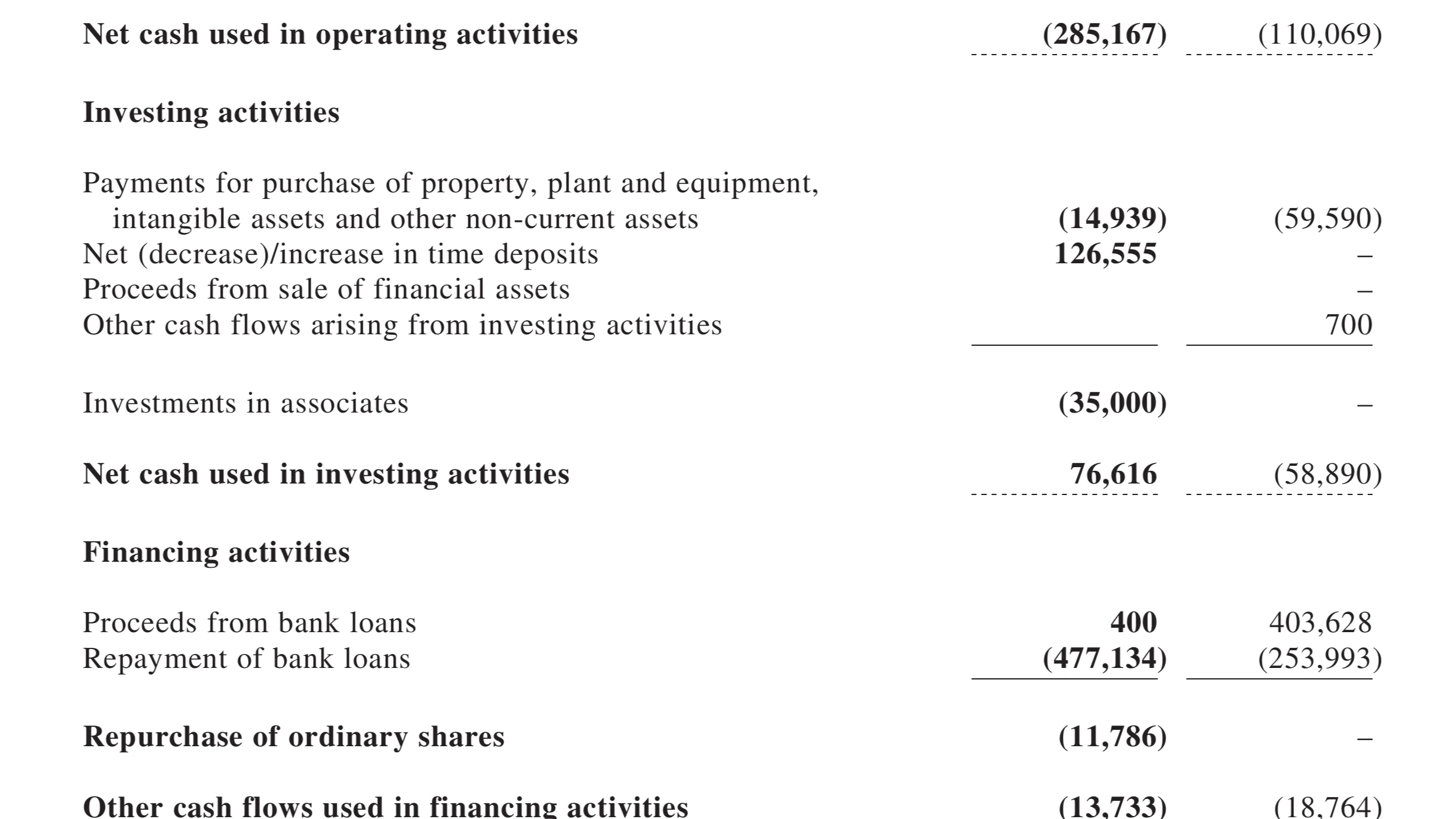
The more consequential mismatch is cash. The filing’s cash-flow statement says operating activities used 285.2 million Chinese yuan in the first half, compared with 110.1 million yuan used in the comparable 2025 period. Yet its liquidity discussion says that working-capital management resulted in a significant increase in net cash inflows from operating activities. These statements cover the same reporting period and point in opposite directions; the announcement does not explain the discrepancy. The cash-flow statement is the direct disclosure of the period’s operating cash result.[1,2]
The balance sheet does not turn the cash question into a solvency verdict
The outflow does not establish an immediate funding problem. Cash and cash equivalents were still 2.20 billion Chinese yuan at June 30, and bank borrowings had fallen to 65.4 million yuan from 357.9 million yuan at year end. The cash-flow statement shows 477.1 million yuan of bank-loan repayments and just 0.4 million yuan of new loan proceeds during the half; the company says repayment was the primary reason cash fell by 774.9 million yuan from December. That debt reduction strengthens the balance sheet, but it is separate from whether the core warehouse-robotics business generated cash in the period.[1,2]
The disclosed working-capital balances do not resolve that distinction. Between December 31 and June 30, trade and bill receivables rose by 155.3 million Chinese yuan, inventory rose by 65.9 million yuan, and prepayments plus other receivables rose by 153.2 million yuan. Trade payables fell by 52.8 million yuan, while contract liabilities rose by 34.7 million yuan. These movements cannot on their own identify the cause of the operating-cash outflow, because the announcement does not provide a full operating-cash reconciliation. They do show that receivables, stock and prepayments did not plainly release cash as revenue grew.[1,2]
Orders are not yet cash conversion
Geek+ has real commercial signals. It reported 2.385 billion Chinese yuan of new signed orders, up 35.5 percent year over year, and says subscription-service orders reached 155.7 million yuan. Its revenue remains overwhelmingly tied to warehouse-fulfilment robotics: 1.202 billion yuan, or 93.6 percent of revenue, compared with 82.2 million yuan of industrial-material-transport revenue. The filing also reports that most revenue, 1.221 billion yuan, was recognized at a point in time rather than over time. Signed orders, subscription orders and revenue recognition are each useful measures, but none proves that cash has been collected or that an order will produce a durable service margin.[1,2,3]
That is the decision change in this result. Geek+ can reasonably point to revenue growth, a higher gross margin, lower debt and a narrower adjusted loss. It cannot use the adjusted measure as evidence that operating cash improved when the same filing reports a substantially larger operating-cash outflow. The next measurable checkpoint is a corrected or clarified cash-flow disclosure, followed by an operating-cash result that turns higher orders, receivables and inventory into collected cash without depending on a further balance-sheet offset. Until then, the company’s near-break-even narrative is a profitability framing, not a cash-conversion conclusion.[1,2]