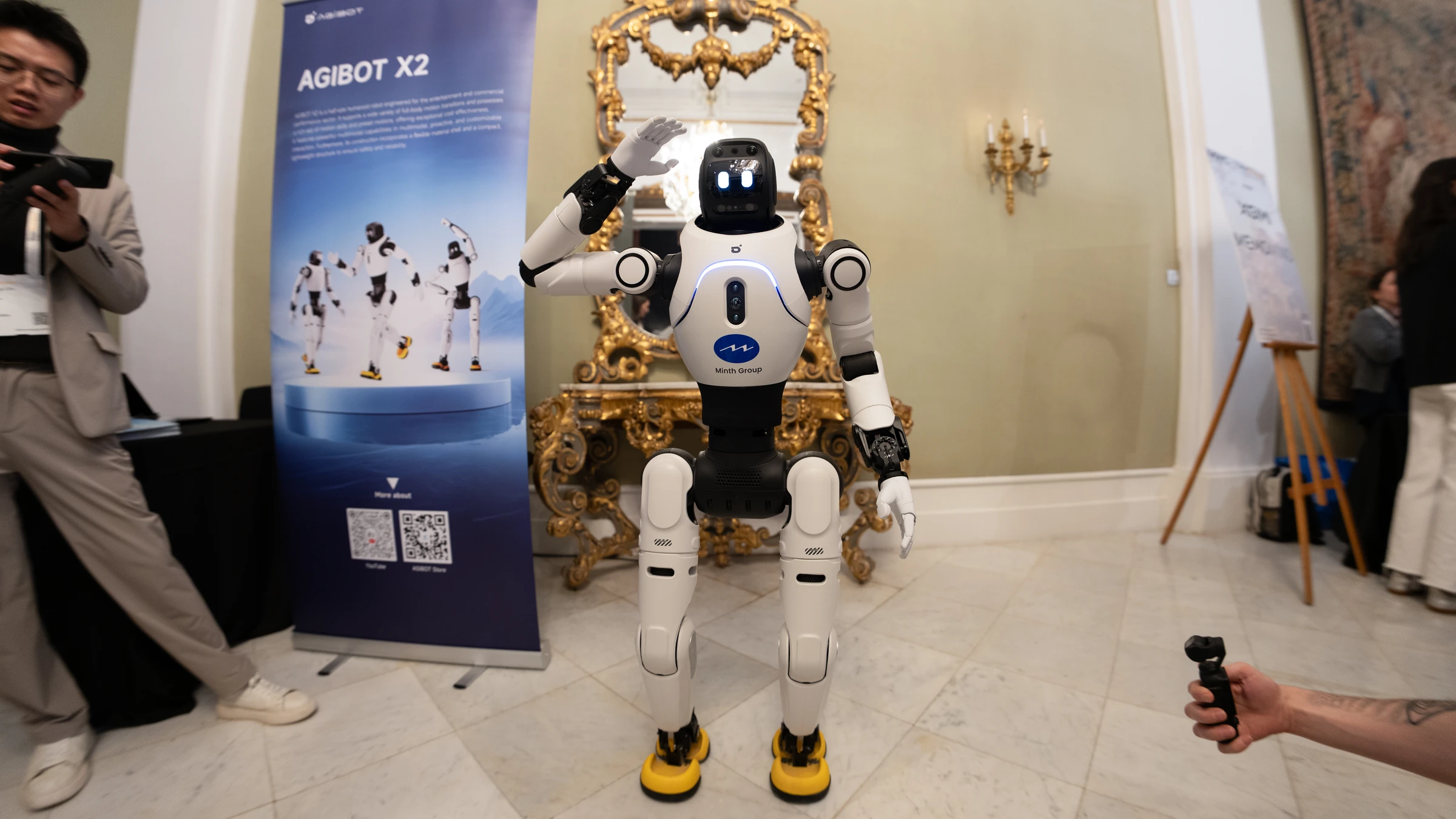
Humanoid shipments are reaching a broader mix of applications, according to IDC’s September 29 update. Research and education, performances and displays, and government data-collection centers accounted for 69% of worldwide shipments in January–June 2026, against 83.8% in full-year 2025. The shift changes where suppliers find customers. It does not measure how much useful work each shipped robot performs.[1]
The mix shifts, but the periods differ
The published shares imply a 14.8-percentage-point reduction in that combined group, calculated as 83.8 minus 69. A half-year share and a full-year share cannot establish a like-for-like annual trend. Nor does the remaining share identify an autonomous factory fleet: IDC describes expansion into manufacturing, retail, logistics, tourism and home use. Its public summary does not give an operating-hours or profitability breakdown.[1]
For a supplier, application diversity is a useful sales question. A school, a visitor attraction and a production line may each be legitimate buyers, while buying different outcomes. The analytical mistake would be to treat a robot sold for one purpose as evidence that it can meet another buyer’s requirements. A larger addressable category is a starting point for qualification, not a substitute for the qualification itself.[1,3]
Two humanoid totals do not make a growth series
The International Federation of Robotics supplies a narrower comparison. Its September 30 World Robotics release reports about 7,000 full-size humanoids above 140 centimeters sold globally in 2025, intended for commercial and professional applications beyond research and entertainment. IDC’s nearly 25,000 shipments cover the first half of 2026 under its own humanoid tracker. Different periods and populations prevent a valid growth calculation between those totals.[1,2]
IFR also says most current humanoid applications remain specialized and often involve human teleoperation. That qualification belongs beside the sales number. It does not establish how any individual product operates, and an intended professional application is not a measured unattended shift. The two publishers independently describe the market, but IFR’s release does not independently reproduce IDC’s application percentages.[2]
A buyer comparing these releases should first ask which machines and uses enter each denominator. Height, intended application and reporting period are explicit differences here. Without harmonized definitions, a more impressive total can reflect broader coverage rather than a superior commercial result. Preserve the distinction before comparing markets, designing a sales target or using a headline as a demand estimate.[1,2]
Entertainment can be commercial work
There is a counterweight to dismissing displays as mere demonstrations. On September 24, AGIBOT announced more than 300 robots across entertainment, education, visitor services and hotel scenarios at Chimelong Spaceship Park. The company described a first deployment phase and supporting connectivity and coordination. This is a supplier announcement, not an independently audited operating result, and it does not establish that every robot is humanoid.[4]
The announcement makes the commercial question more precise. A visitor experience can be the product rather than a rehearsal for factory work. Its value should be assessed against that purpose. AGIBOT’s release does not disclose a comparative cost per completed service, intervention rate or repeat-order result. A deployment claim therefore deserves a follow-up on the actual service delivered, without either dismissing the application or assuming its economics.[4]
The next evidence is a task result
IFR’s January robotics outlook identifies cycle times, energy consumption and maintenance costs as requirements for humanoids competing with established automation. Those are task-level comparisons. For a factory or warehouse, the relevant baseline is the existing way of completing the work, including its quality and support needs. A fleet count alone cannot supply that comparison.[3]
A useful next checkpoint is a named customer reporting completed tasks per operating hour, human interventions, maintenance downtime and the cost of the incumbent process over the same period. Repeat orders would then add evidence that the initial service remained worth buying. These are proposed evaluation measures, not results established by the shipment releases. The market’s broader application mix warrants investigation; productive, repeatable operation still has to be demonstrated for the task being purchased.[2,3,4]