What changed
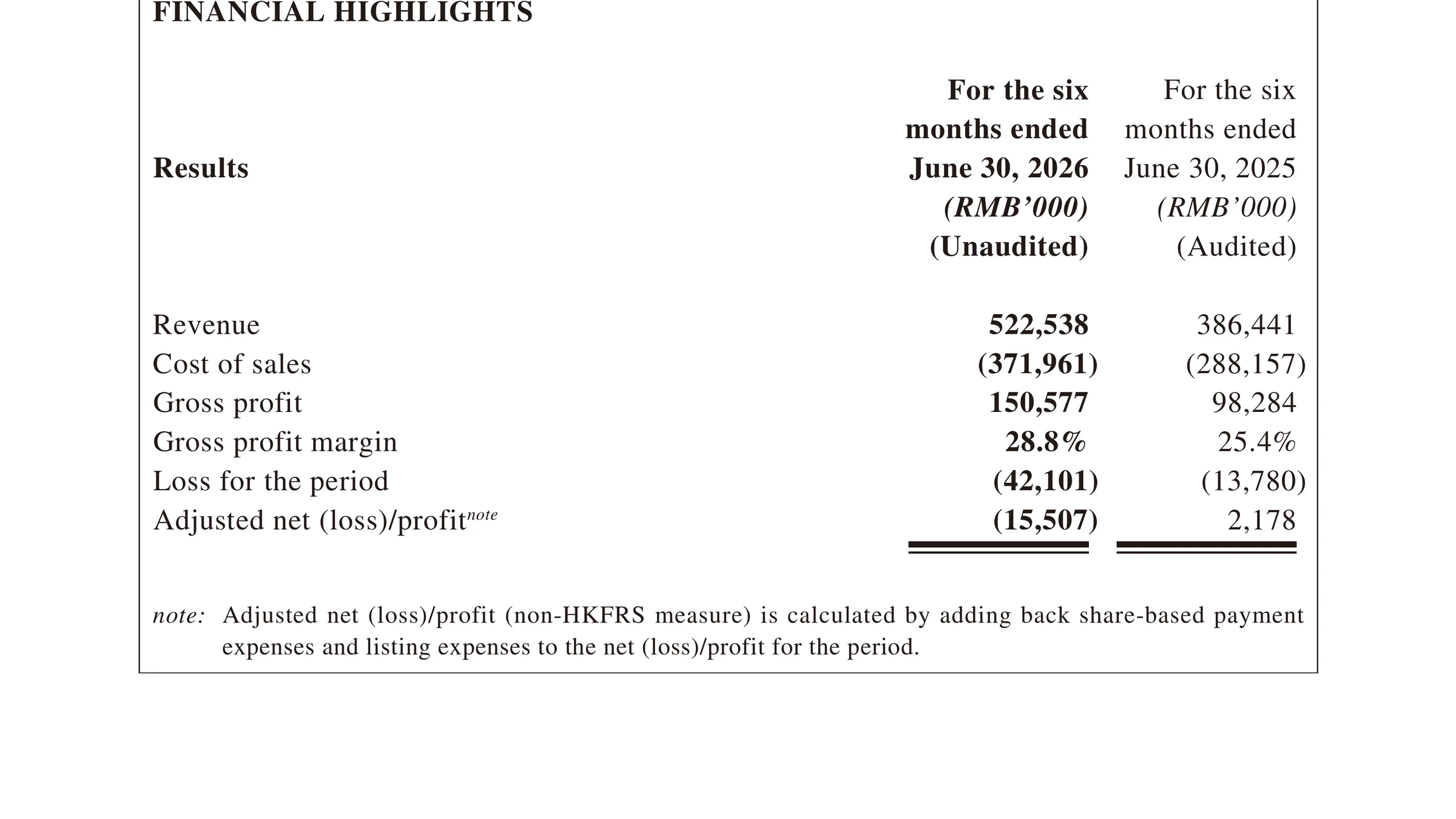
Shenzhen LDROBOT, listed in Hong Kong as 1236 in May, reported 522.5 million Chinese yuan of revenue for the six months to June 30, up 35.2% from a year earlier. Gross profit rose 53.2% to 150.6 million yuan and gross margin increased 3.4 percentage points to 28.8%. The new growth engine was robot lawn mowers: their revenue reached 200.7 million yuan, up 159.1% year over year, lifting their share of group revenue from 20.1% to 38.4%.[1,2]
The margin did not cover the spend
The commercial change is clearer in the cost comparison than in the revenue headline. LDROBOT’s gross profit increased by about 52.3 million yuan. Two expense lines alone grew by about 69.6 million yuan: selling and marketing rose 44.9 million yuan, or 124.1%, while research and development rose 24.7 million yuan, or 48.5%. That 17.3 million yuan gap, before administrative and other changes, helps explain why the company moved from adjusted net profit of 2.2 million yuan to an adjusted net loss of 15.5 million yuan. The reported loss was 42.1 million yuan, compared with 13.8 million yuan a year earlier.[1]
This is not an unexpected cost structure. In its April prospectus, LDROBOT said robot lawn mower revenue had reached 136.9 million yuan in 2025 after mass production began in 2024, and that more than 72% of its 79 sales-and-marketing staff were dedicated to the mower line. The new filing shows the payout from that push in revenue and mix, while also showing that moving from a perception-component supplier into a consumer robot brand adds channel, marketing and product-development costs that margin expansion has not yet absorbed.[1,3]
Cash changes the risk test
The filing does not make this an immediate funding-stress story. Cash and cash equivalents were 720.8 million yuan at June 30, largely after 698.9 million yuan of net proceeds from the May offering, and the company reported no interest-bearing debt. Operating cash outflow narrowed to 66.5 million yuan from 104.8 million yuan a year earlier, although the filing says increased receivables and inventories remained working-capital uses. The more useful next test is whether mower revenue keeps converting into gross profit and cash without another comparable step-up in brand, channel and research spend.[1]
What would change the conclusion
LDROBOT has evidence of a real revenue mix shift, not yet evidence of a self-funding consumer-robot model. Its next results need to show whether higher-margin mower and sensor sales can cover recurring selling and research costs, and whether receivables, inventory, returns, warranty and service costs remain controlled. The current filing does not disclose those unit-economics measures or retail sell-through, so it cannot establish the durability of the overseas expansion.[1,2,3]