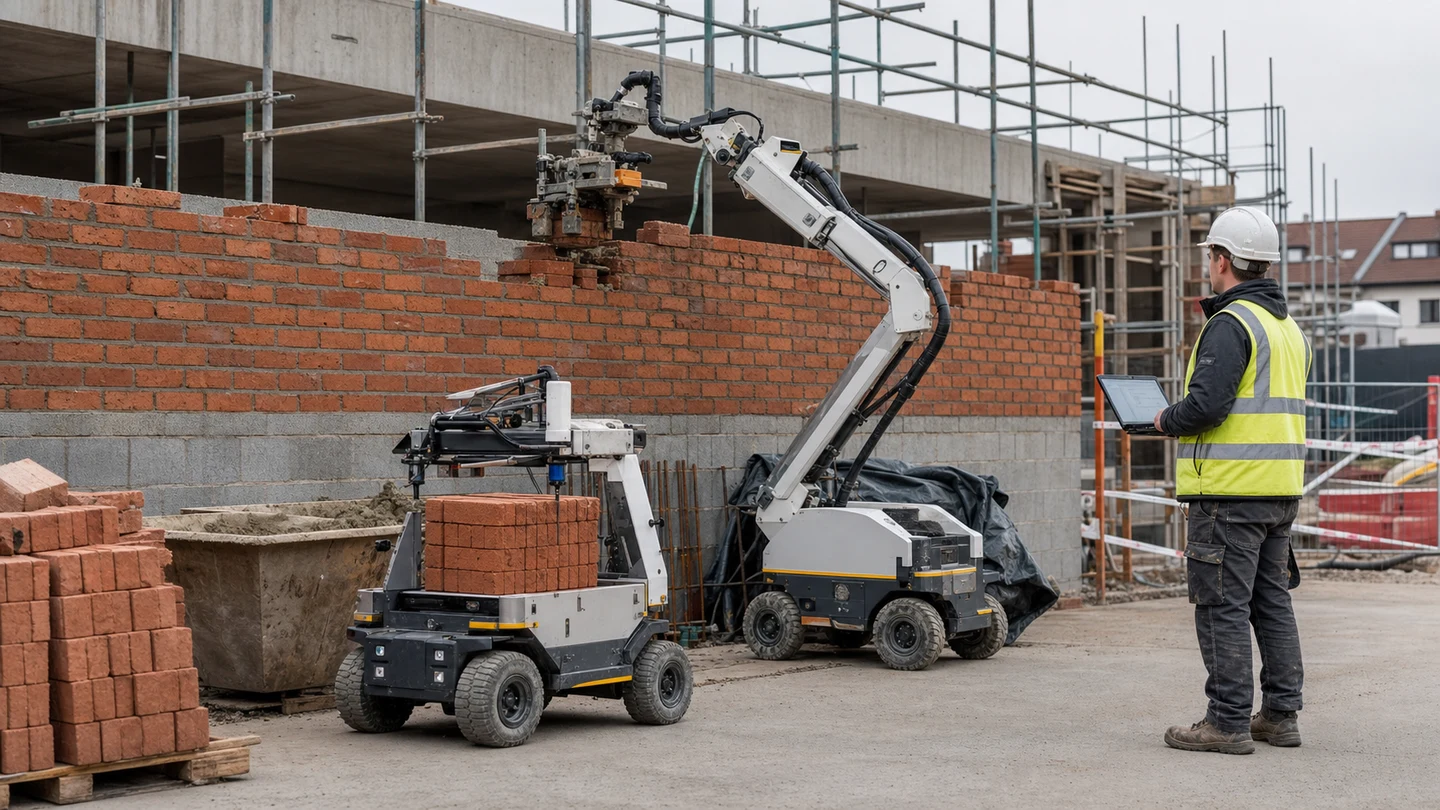
The financing carries the fleet
Amsterdam-based Monumental announced a $32 million Series B on July 15, led by Khosla Ventures with existing investors Plural and Hummingbird participating. The company says the capital will grow its hardware and software team, put more robots on European sites, launch in the United States this year and broaden the construction work its machines can perform. Fortune and Resilience Media separately reported the round and those expansion plans.[1,2,3]
The financial transmission differs from an equipment sale. Monumental works like a specialist masonry subcontractor: a builder receives a quote in familiar per-brick or per-area terms, while Monumental supplies and operates the fleet. That leaves the startup carrying robot production, transport, maintenance, uptime and operator costs as it earns revenue from completed work. The $32 million therefore finances service capacity and field execution rather than customer purchases; that is an inference from the disclosed model, not a reported margin or return.[2,3]
Deployment is real; the economics are still hidden
Customer Dura Vermeer says Monumental's robots were used at three Amsterdam project sites and scored well in its evaluation for ergonomics and quality. The same account says the technology remains in full development and needs further refinement in execution and coordination. Public fleet counts also do not reconcile: Monumental's press page lists more than 100 robots deployed, while Fortune and Resilience Media report more than or about 150. Timing or definitions could explain the gap, but no asset register is public.[1,2,3,4]
The consensus story is capital chasing a construction-labor shortage. The new evidence is who carries the deployment risk: contractor customers avoid buying robots, while Monumental and its investors fund the hardware and field organization. The company disclosed no valuation, round terms, ownership dilution, revenue, gross margin, cash burn, debt, wall price, utilization, uptime, repairs, labor per site or customer savings. The next measurable catalyst is a named paid U.S. site with fleet, utilization and uptime data, or the first quantified per-wall economics.[1,2,3,4]