What changed
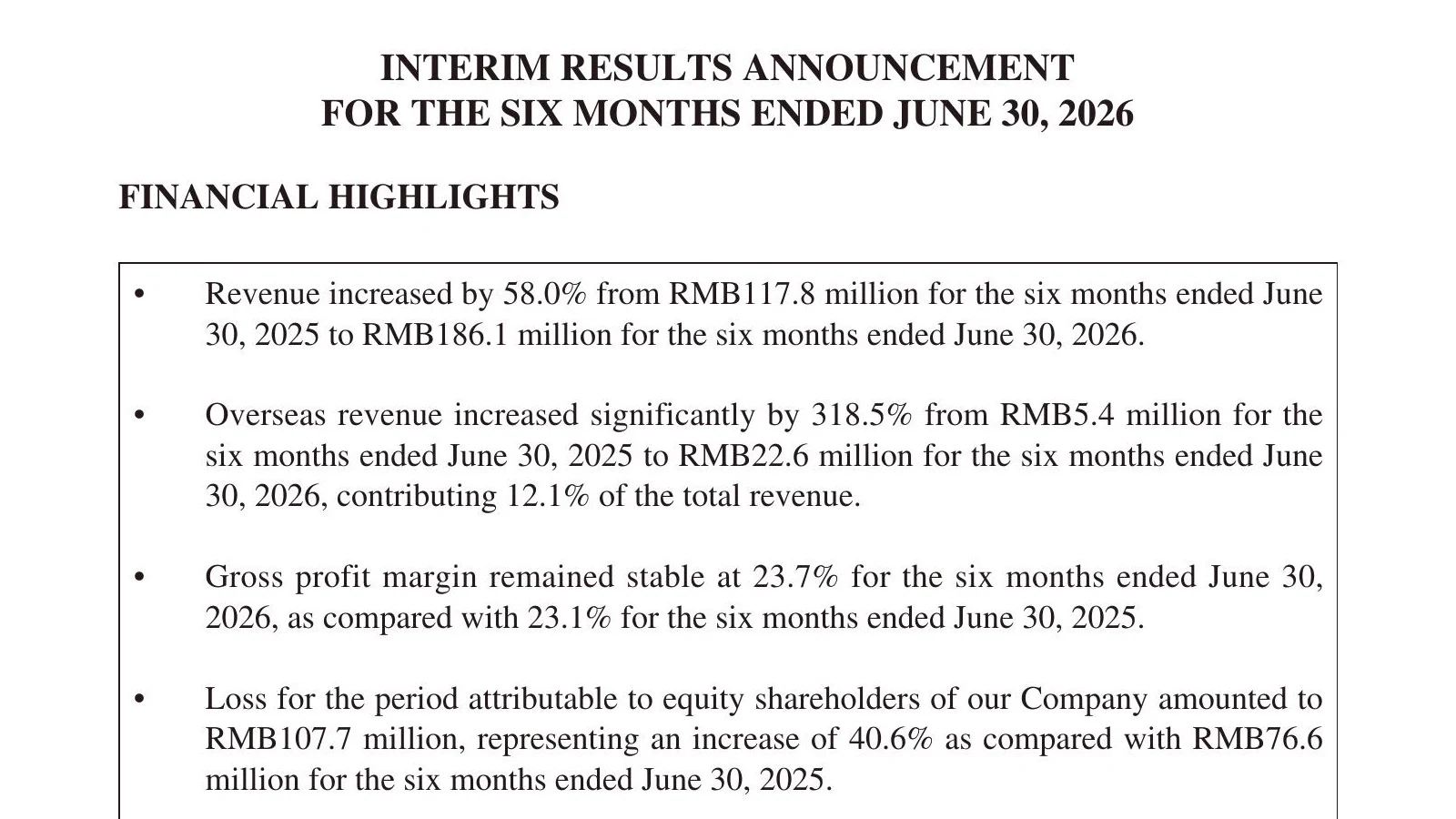
Robotphoenix, listed in Hong Kong as 6871 in May, reported 186.1 million Chinese yuan of first-half revenue, up 58.0% from 117.8 million yuan a year earlier. Gross margin rose from 23.1% to 23.7%, yet reported loss widened 40.6% to 107.7 million yuan. Its adjusted loss, which excludes share-based payment and listing expenses, rose 53.9% to 75.7 million yuan.[1,2]
The growth is less broad than the headline
The filing gives the revenue gain a more specific shape. Automotive-components and new-energy revenue rose by 47.5 million yuan, from 20.3 million to 67.8 million yuan, because the company recognized a relatively large robotics-solutions order. That increase equals 69.6% of the group’s 68.3 million yuan revenue gain. Robot bodies also grew sharply, but two unnamed customers together supplied 66.7 million yuan, or 35.8% of first-half sales.[1]
A better-funded, still-unproven scale-up
The results do not establish a funding shortfall. After its May offering, Robotphoenix reported 605.0 million yuan of cash and cash equivalents, while interest-bearing borrowings rose to 258.6 million yuan from 159.7 million yuan at year-end. The company said it had not used any of the 672.9 million Hong Kong dollars of net offering proceeds by June 30; 40% is allocated to technology development and 28% to production lines and capacity through 2030.[1,3]
What to watch
The revenue gain is real, but it is not yet evidence of a broad, repeatable demand base or cash conversion. Robotphoenix does not name the two major customers, disclose the large automotive order’s terms, or show whether those buyers will renew. The next material checkpoint is whether customer concentration falls while robot-body and solution revenue convert into margin and operating cash without another comparable order carrying the half-year result.[1,2,3]