What happened
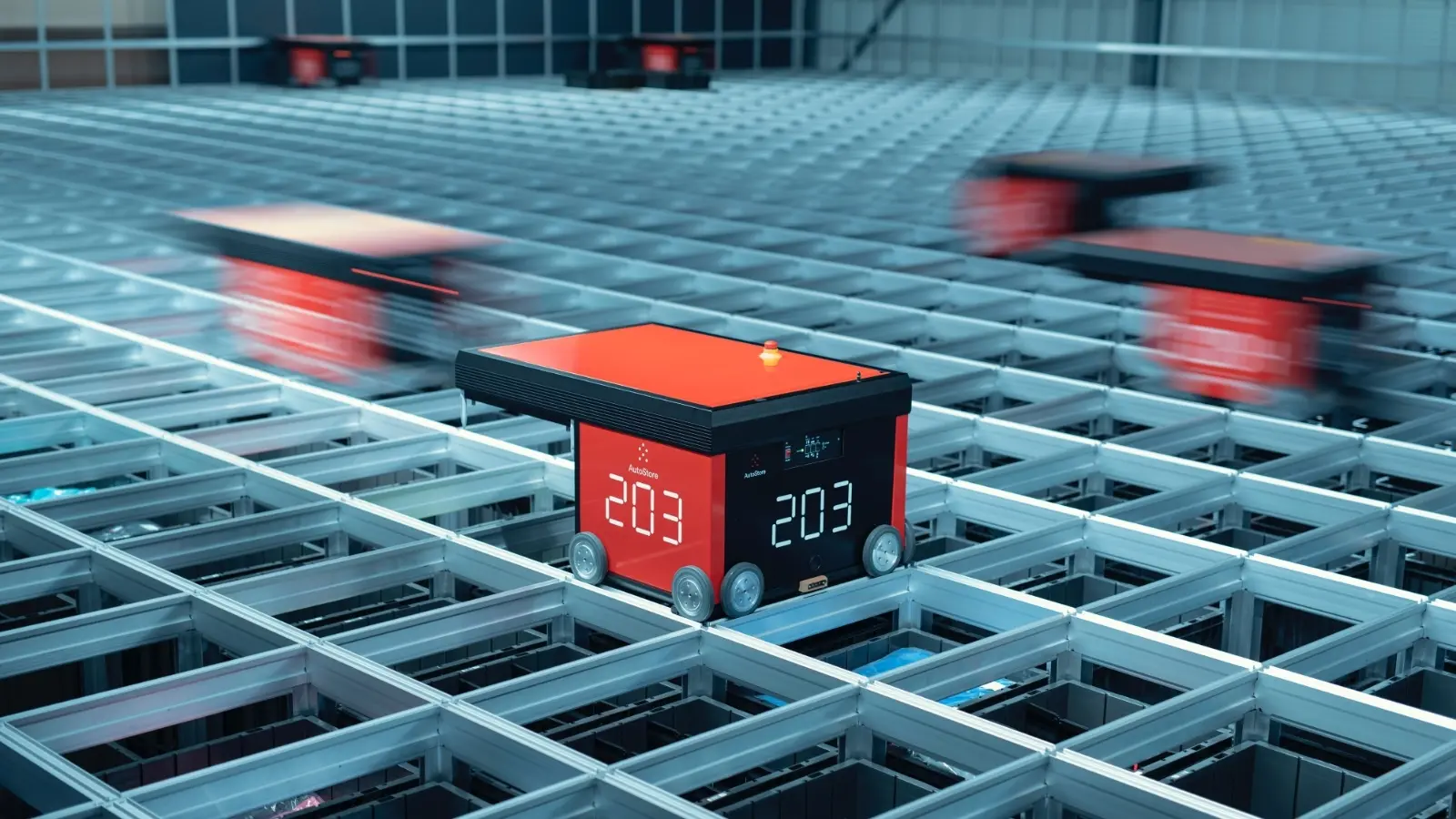
SoftBank Robotics said on Sept. 7 that it had begun selling four new AutoStore solutions in Japan and published a case-study video for SB Frameworks' Kawasaki operation. The release describes a 160-robot, 65,000-bin, 28-port system that combines AutoStore with Berkshire Grey picking robots and BALYO automated forklifts. It presents the combined equipment as extending automation from inbound through storage and dispatch.[1,4]
This is a live logistics site, not a trade-show demonstration. WeeklyBCN reported after a facility visit that the Kawasaki office sits inside the ESR Higashi Ogishima Distribution Centre and handles business and consumer products for SB C&S. AutoStore robots retrieve bins across the grid and deliver them to ports, where staff complete the item-handling and shipping work; the robots also recharge automatically.[2]
What the evidence shows
The operating boundary is more revealing than the fleet count. MONOist reported that the site moved into the Kawasaki facility in January 2026 and was using AutoStore for about 250,000 stock-keeping units from a wider catalog of roughly 500,000 items. Because bins are stacked as high as 12 levels, a low-positioned item can force the system to excavate bins above it. Operators responded by changing which items sit in which zones and levels; some seasonal, oversized or otherwise unsuitable inventory remains on conventional shelving and is handled manually.[3]
That makes the facility a useful counterexample to the idea that a dense robot grid is the same thing as an autonomous warehouse. The core goods-to-person loop removes walking and automates bin movement, but the system still depends on inventory placement, exception routing and human work at the ports. MONOist also described BALYO and Berkshire Grey as still being introduced or tested for work outside the AutoStore boundary, while SoftBank's newer release describes those systems as part of the broader inbound-to-outbound setup. The difference is a status question, not evidence of lights-out operation.[1,2,3]
The decision delta is therefore narrow but material. The ordinary interpretation is that more robots mainly remove warehouse labor. The current evidence says the harder deployment problem is operating the whole inventory system around the robots: deciding what belongs in the grid, preventing deep-bin delays, preserving a human fallback for exceptions and commissioning the equipment that connects storage to inbound and outbound flow. That shifts the buyer question from robot count to usable coverage of the warehouse's actual SKU mix.[1,2,3]
The strongest limit is that none of the opened sources gives a site-level throughput figure, uptime series, staffing change, maintenance burden, total operating cost or payback period. The next measurable checkpoint is whether SB Frameworks can publish those figures after the Berkshire Grey and BALYO systems move from testing or planned operation into a stable inbound-and-outbound workflow, and whether the human exception layer shrinks without moving difficult inventory back to manual shelves.[1,2,3]