A new channel alongside a weaker one
Serve Robotics has announced robot delivery through Grubhub, Wonder’s marketplace, initially in Chicago, Los Angeles and Alexandria. Serve says the launch will include more than 100 participating Grubhub merchants in Chicago and nearly 200 in Los Angeles. The statement establishes availability through another ordering channel; it does not say how much delivery volume or revenue that channel will produce.[2]
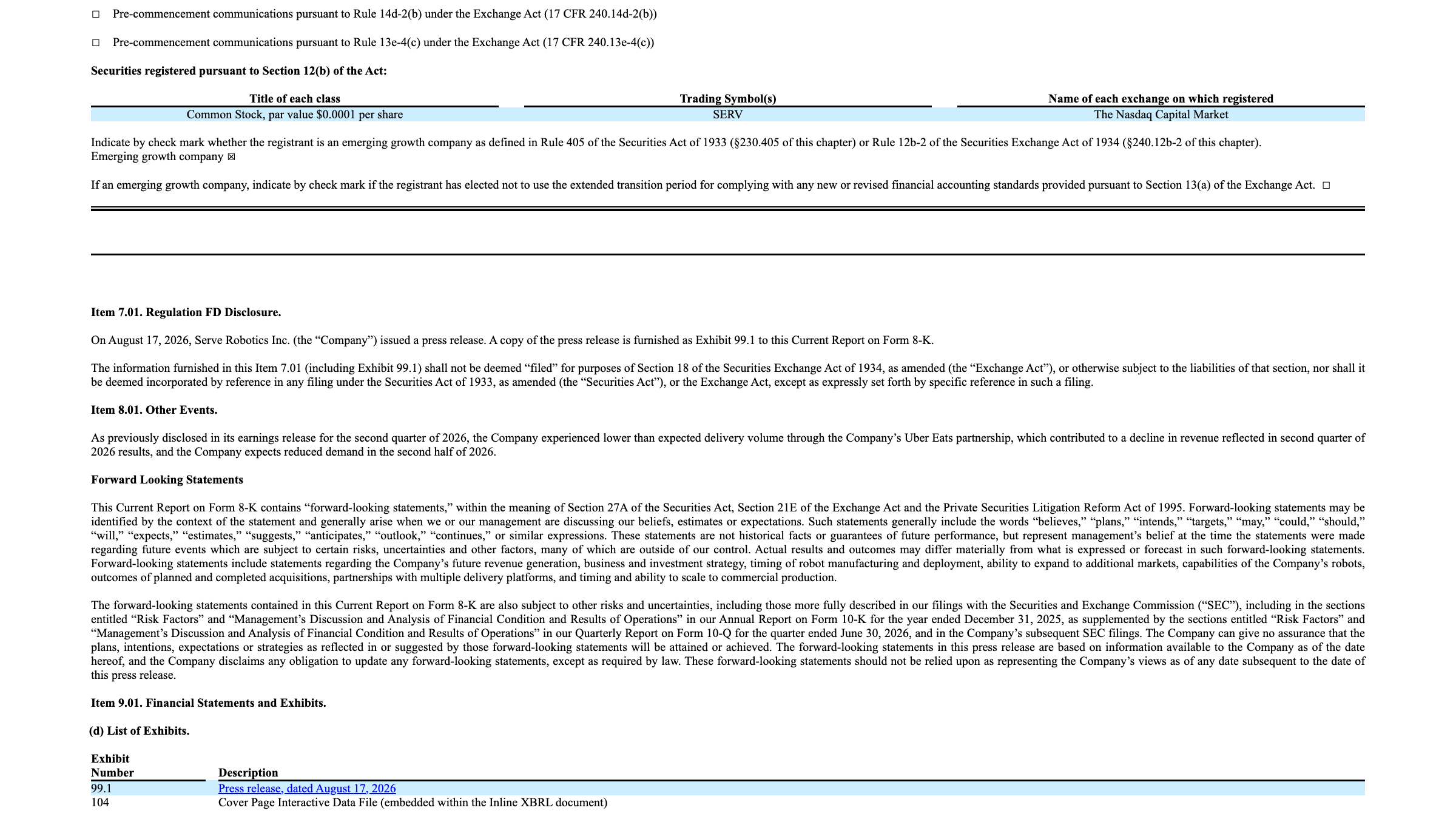
The same day, Serve’s Form 8-K said lower-than-expected delivery volume through its Uber Eats partnership contributed to a second-quarter revenue decline. The filing also says the company expects reduced demand in the second half of 2026. That is the disclosed operating condition against which the Grubhub launch should be read, rather than evidence that the new partnership has already replaced the lost volume.[1,3]
What changed—and what remains undisclosed
Axios reported that Chief Executive Ali Kashani said Serve does not intend to renew its Uber agreement in 2027. The Grubhub arrangement therefore marks a channel shift, not merely another city launch. But the public announcement discloses neither a contract term nor a minimum robot fleet, order commitment, price or revenue commitment. It is evidence of marketplace access, not a disclosed revenue replacement.[2,3,4]
The next measurable test
The useful next evidence is utilization: disclosed order volume, active robots or partner revenue from Wonder and Grubhub, alongside any change in demand through the remaining Uber Eats operation. Serve’s latest filing is clear about the near-term demand warning; the partnership release is clear about merchant access. Neither yet gives the unit economics or volume needed to show whether the newer channel offsets the weaker one.[1,2]