Orbit is demonstrated; routine service is not
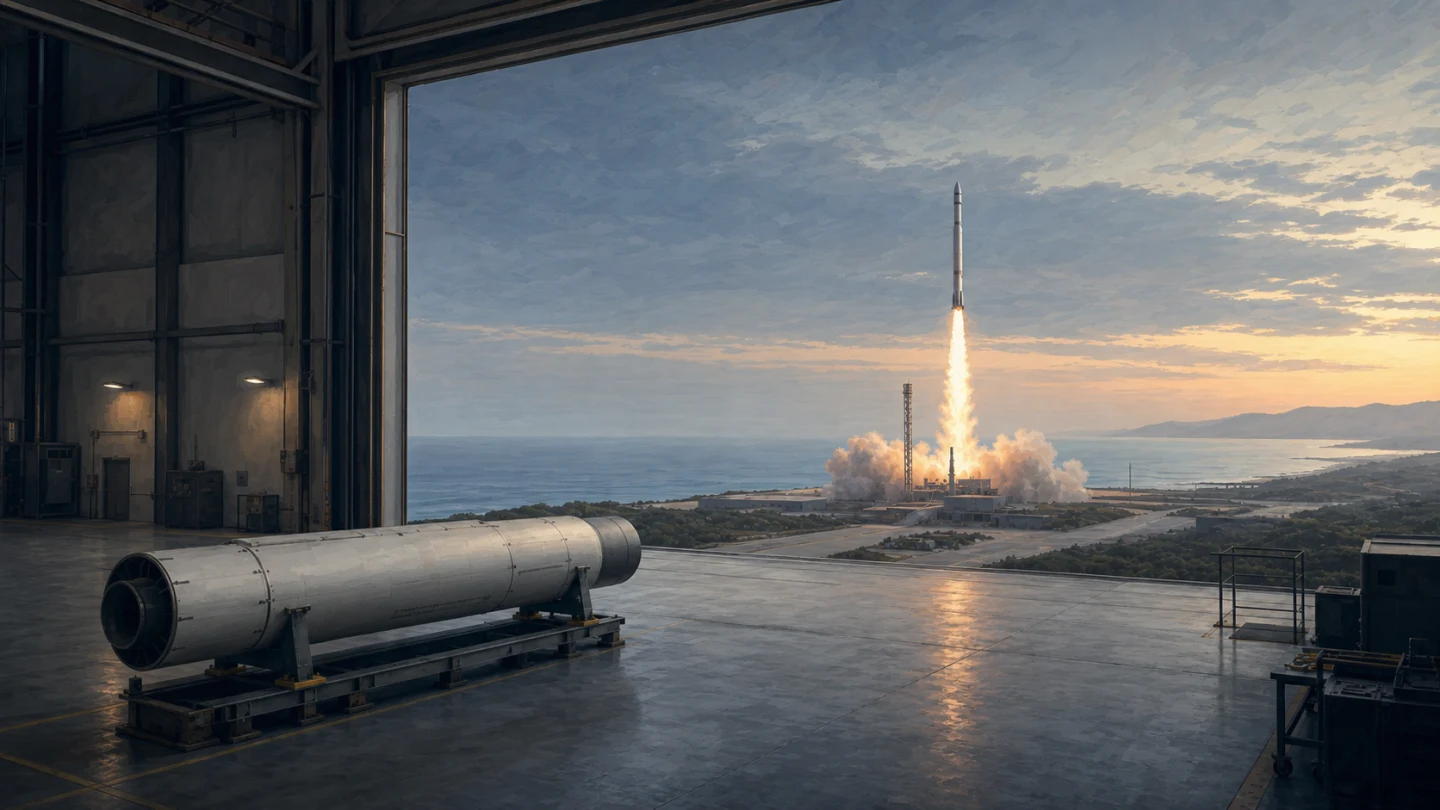
Skyroot Aerospace's Vikram-1 lifted off from the Satish Dhawan Space Centre at 12:05:30 p.m. IST on July 18 and completed India's first orbital launch by a private company. ISRO says the four-stage vehicle placed Skyroot's SCOPE and Grahaa Space's SOLARAS S3 satellites into low Earth orbit. Other payloads remained attached to the upper stage for in-orbit experiments, so the mission should not be described as separately deploying every payload it carried.[1,2,4]
The flight moved Vikram-1 from ground qualification to demonstrated orbital insertion. It was not a standalone test of Skyroot's infrastructure. ISRO says it provided access to solid-motor casting and static-test facilities, tested the upper-stage liquid engine, supported trajectory analysis and vehicle integration, and maintained continuous safety support. IN-SPACe provided technical consultation, mission reviews and launch clearances.[1]
The financing case still lacks operating numbers
In May, Skyroot raised about $50 million in primary equity co-led by Sherpalo Ventures and GIC plus about $10 million in structured debt managed by funds affiliated with BlackRock. TechCrunch reported a $1.1 billion pre-money valuation. Skyroot said the capital would scale manufacturing and Vikram-1 launch frequency and support the larger Vikram-2, but it declined to disclose revenue or customer backlog.[5]
The postflight commercial timeline remains unclear. Reuters reported Skyroot's statement that Vikram-1 was a test flight and that a few more tests would precede routine commercial flights. Before launch, Space.com described Aagaman as the first of three development flights. Hours after the mission, CEO Pawan Kumar Chandana told NDTV Profit that commercial flights would come next and said Skyroot's facility could build one rocket a month. Those statements can describe development missions carrying customer payloads before routine service; they do not establish when routine commercial operations begin. A factory-capacity claim is not evidence of an achieved monthly launch rate.[2,3,4]
The next proof is repeatability and paid demand
One successful orbital insertion reduces uncertainty around Vikram-1's end-to-end launch capability. It does not establish repeat reliability, customer willingness to pay, mission pricing, gross margin, insurance cost or a sustainable launch cadence. Public customer names and payloads show interest, but the reviewed sources do not identify payment status or contract values.[1,2,3,4,5]
The next decision-changing evidence is a repeat flight with disclosed timing, a paying manifest confirmed by a customer, or company reporting that connects backlog and launch pricing to revenue and cash use. Until then, Vikram-1's orbital result is a technical milestone for Skyroot and India's private-space policy, not proof that the financed commercial model has reached routine operation.[1,2,4,5]