What changed
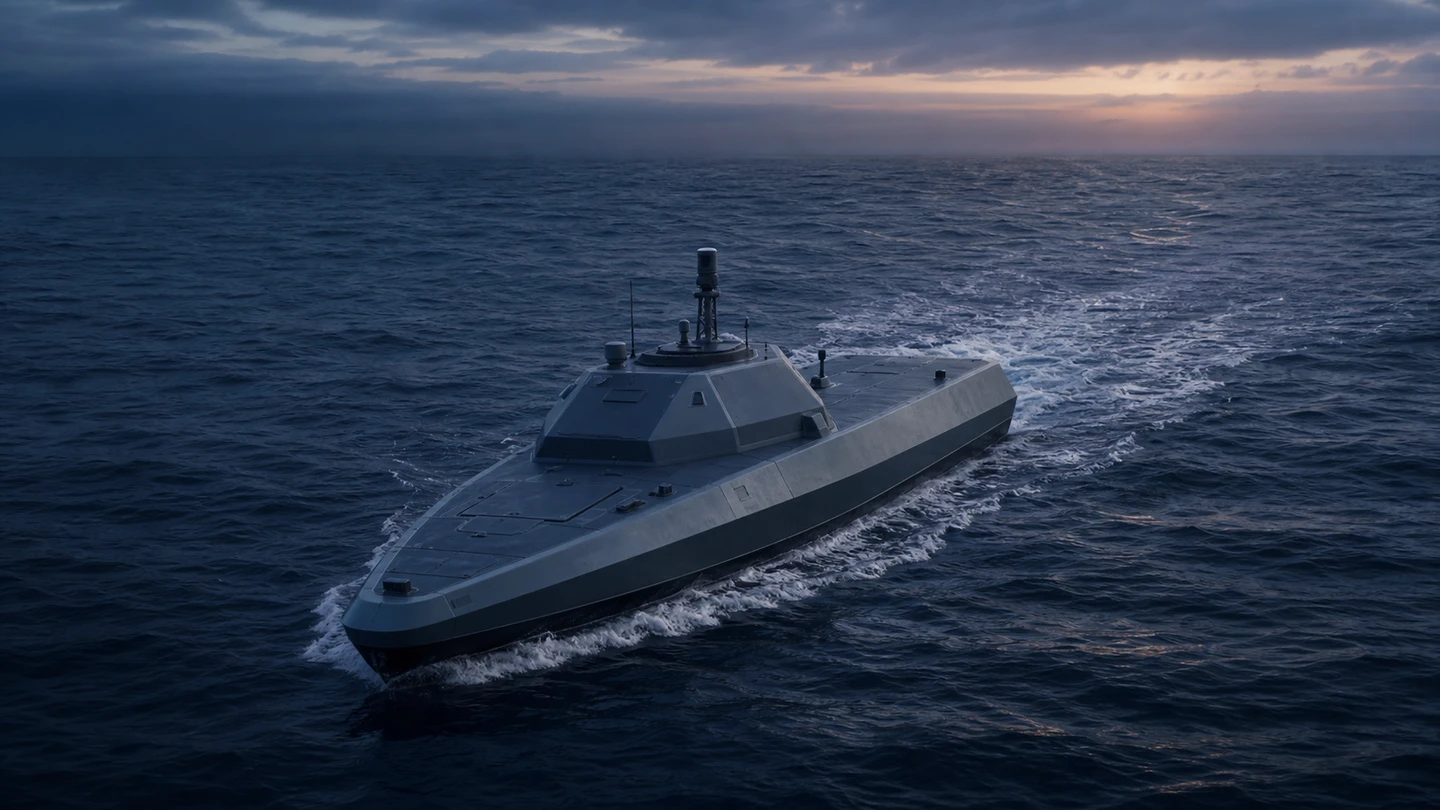
U.S. Central Command's July 12 strike release said only that American forces had used one-way attack sea drones for the first time. A July 13 follow-up added the operational detail: CENTCOM said three Saronic Corsair unmanned surface vessels hit a submarine and ship-maintenance facility at Bandar Abbas Naval Base. Associated Press and Breaking Defense reported the identification, and CENTCOM published a 24-second edited video showing three approaches and three explosions.[1,2,3,4]
The update establishes that a named commercial platform crossed from fielding and support work into one-way combat employment. Breaking Defense reported that Task Force 59 began fielding Corsair in March and that a vessel of the type assisted a June rescue off Oman. It does not establish that target selection or the terminal run was autonomous; CENTCOM has not disclosed the control mode.[1,3,4]
What remains unproven
CENTCOM did not disclose launch method, range to target, operator intervention, communications, unit cost, inventory, failure rate or after-action results. The edited video shows three craft approaching shoreline infrastructure and subsequent explosions, but it is not an independent damage assessment. The command's claim that the strike degraded Iran's ability to attack shipping therefore remains a military assessment.[1,3,4]
The production checkpoint is separate. The Navy has Saronic among seven companies in medium unmanned surface vessel testing, with successful entrants due $15 million and eligibility for follow-on production after tests scheduled to finish by October. That program covers a broader vessel class, not proof of Corsair scale. The next measurable evidence is an after-action or procurement record disclosing mission mechanics, performance and repeatable supply.[3,5]