The new asset is a repeatable test platform
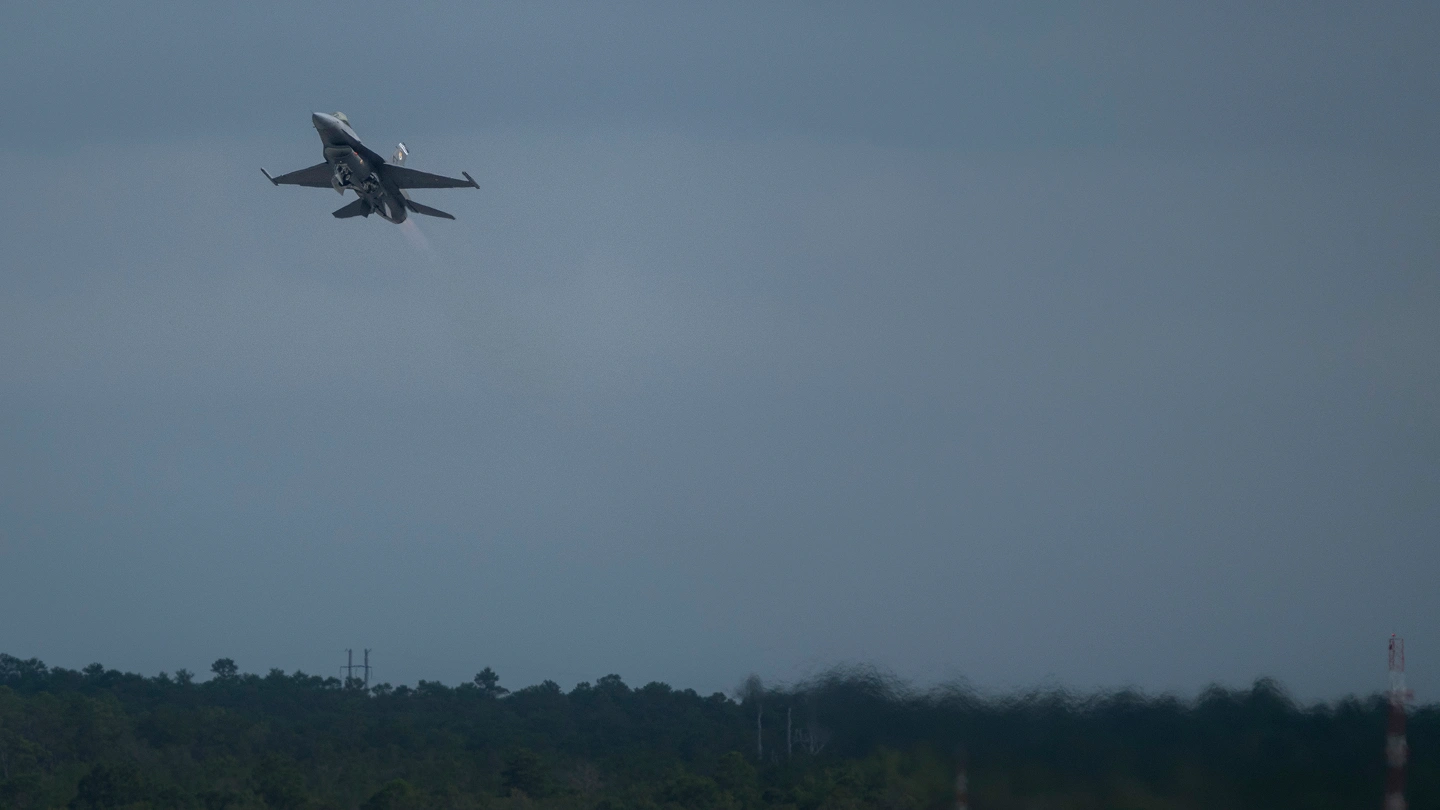
VENOM-modified F-16s began flying in June to check the aircraft and added systems, followed by successful in-air testing with an artificial-intelligence agent controlling flight in July, according to the U.S. Air Force. DARPA says a group of F-16s has been converted under the program. This is not the first full-size fighter testbed flown by AI: the one-of-a-kind X-62A VISTA did that earlier. The change is a move to several modified standard F-16s that can repeatedly host autonomy experiments.[1,2,3,4]
The VENOM Autonomy Kit adds hardware, software and instrumentation, and DARPA says it interfaces with flight controls and mission systems without changing the jet's core software. A cockpit switch lets the pilot move between conventional and AI control. That mechanism creates a reusable test pipeline for comparing agents on a more representative aircraft; it does not turn the modified jets into an operational autonomous fleet.[1,2,3]
The onboard human pilot defines the current limit
A human pilot remained in the cockpit throughout the described tests to monitor the agent and take control if needed. The opened sources do not establish an uncrewed flight, weapons use, a combat mission or operational readiness. They also do not identify the agent or vendor, disclose the maneuvers performed, give quantitative performance or report the number of attempts and failures. AeroTime reported that the Air Force supplied no schedule for the next phase.[1,2,3,4]
The consensus was that fighter-autonomy work had already progressed from simulation to the specialized X-62. The new evidence is a kit-based path for running agents across several F-16 test platforms. That exposes DARPA, Air Force test units, autonomy suppliers and Collaborative Combat Aircraft planners to a more repeatable live-flight evidence cycle, while leaving combat performance unresolved. The next measurable catalyst is disclosed multi-agent, multi-ship beyond-visual-range testing, including results and safety interventions, followed by any demonstrated transfer to an uncrewed platform.[1,2,3,4]