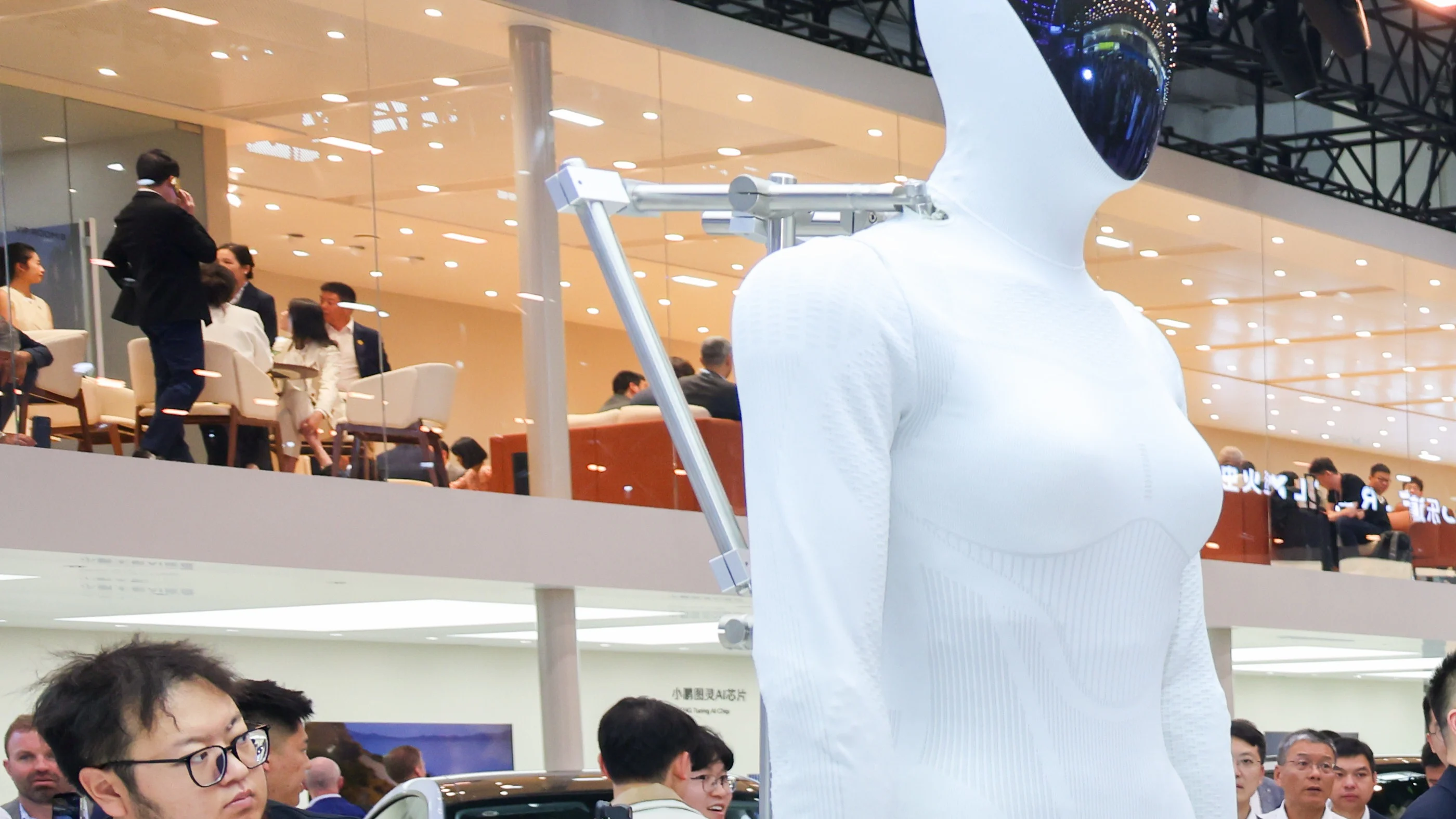
A capital deal, not a completed round
XPENG’s humanoid-robotics business has a new financing structure and a new name, Dogotix, but the important record is more conditional than the headline. On Aug. 24, XPeng, Dogotix, investors and executive subscribers signed a share-purchase agreement with a stated US$900 million aggregate purchase price. The Hong Kong Stock Exchange filing says the first and second closings remain subject to representations, required consents and the Dogotix equity-incentive plan. As of that announcement, none of those conditions had been satisfied or waived. That establishes a signed financing arrangement, not proof that all of the capital has arrived or that the unit has already become operationally independent.[1,2,4]
The US$900 million is not one external cheque
The filing separates the money in a way that changes the commercial reading. External investors led by IDG Capital, with Alibaba, Tencent and Gaorong Ventures, conditionally agreed to buy US$600 million of Dogotix preferred shares. XPENG’s wholly owned XPeng Dogotix subsidiary is separately set to subscribe US$200 million, and entities controlled by chairman and chief executive Xiaopeng He and co-president Hongdi Brian Gu are set to buy US$100 million of ordinary shares. The executives also have warrants to buy up to another US$500 million of shares; the filing explicitly keeps those possible exercises outside the current US$900 million financing. The valuation therefore records an outside price, but it also depends on parent and management capital rather than representing US$900 million of third-party cash.[1,3]
XPENG retains the financial control point
Dogotix will become less than wholly owned, but not a separate economic answer for its parent. Under the filing’s subscription-and-incentive-plan assumptions, XPENG would own about 81.97% of Dogotix. If an additional investor takes the reserved shares, the equity plan is fully used and the executive warrants are exercised, the stake would fall to about 68.41%. In both cases, Dogotix remains a subsidiary and its financial results continue to be consolidated into XPENG’s accounts. The structure can give the robotics business a dedicated capital pool and a market price, but it does not yet isolate robotics revenue, cash consumption, margins or production cost from the parent’s public reporting. That is the distinction a headline valuation alone hides.[1,4]
Capital still has to become operating evidence
XPENG says the proceeds are intended for hardware and software research, physical-AI model training, data generation, production facilities and global commercial expansion. It also says IRON is expected to enter mass production by the end of 2026, with initial use at XPENG stores and campuses before sales and deliveries in China and overseas in 2027. Those are future steps, not a disclosed completed-output record. Reuters likewise reported the financing as backing a plan for mass production and 2027 sales. The record does not name a paying external robotics customer, a unit price, a production yield, a service burden, a completed deployment metric or a standalone Dogotix income statement. Neither the financing agreement nor the implied US$6.3 billion valuation supplies those missing operating denominators.[1,2,3]
What would change the conclusion
That sequence makes this primarily a balance-sheet and governance event. It may make Dogotix easier to fund and benchmark without requiring XPENG to give up strategic control. The announcements do not disclose a robot price, order backlog, installed base or unit margin. Those operating measures, rather than the post-transaction valuation, will determine whether the new capital is becoming a scalable business.[1,2]
The decision delta is not that a high valuation proves humanoid production is imminent, or that conditional financing means the strategy lacks backing. It is that XPENG has created a measurable finance-and-control checkpoint before the sector’s harder manufacturing test. First, the company needs to disclose that the tranches have closed on the stated terms. Then Dogotix needs evidence that the money turns into repeatable output: a dated production figure, named external customer use, delivered units, revenue recognition, support requirements and a clear measure of cash consumption. Until those records appear, the defensible conclusion is narrow: XPENG has arranged substantial capital and retained control of a planned robotics subsidiary; the commercial performance that would justify the price remains to be demonstrated.[1,2,3,4]