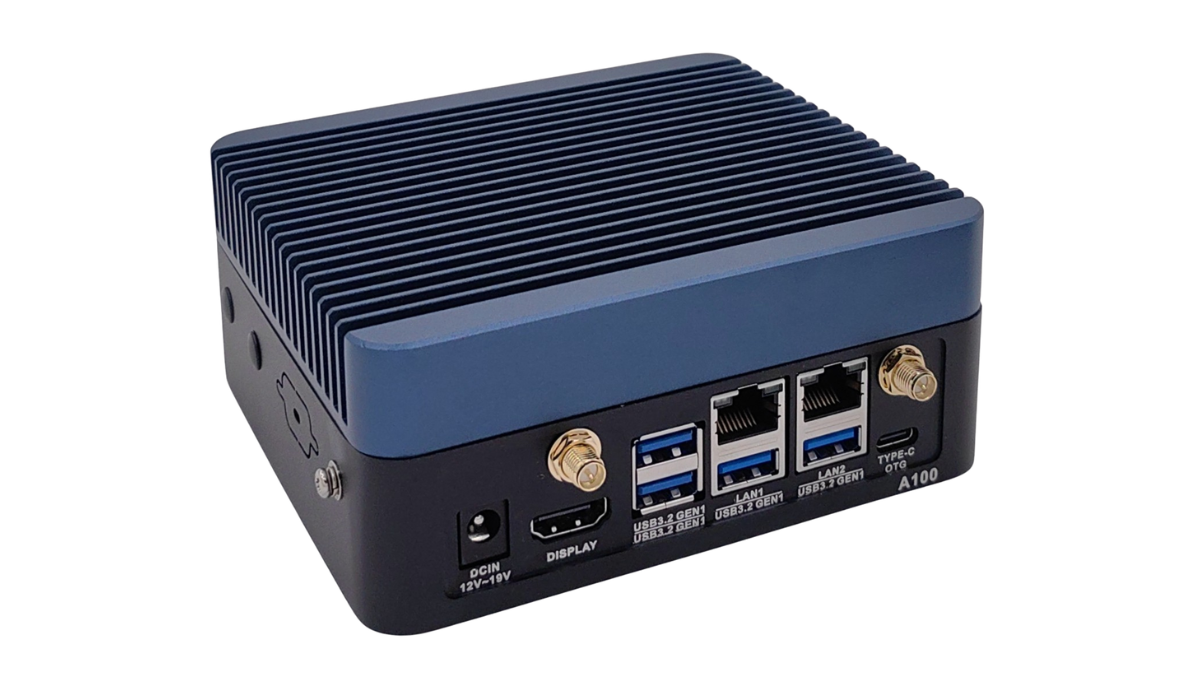
A machine vision computer has to do two jobs at once: process the images its software needs, and fit into the equipment that collects them. A camera connection, a cable bend or an inaccessible mounting point can shape the installation as directly as the processor choice. Domify's A100 sits at that intersection. The company presents it as a Jetson-based industrial edge AI platform, with an aluminum enclosure and configuration support for machine vision, robotics and automation projects.[1]
Start with the image path
Domify's edge computing guide describes image acquisition, inspection, classification, detection and measurement among the tasks such systems can support. Processing beside the camera is intended to reduce the data sent elsewhere and dependence on a remote connection. The same guide makes the hardware decision conditional on the model, camera count, frame rate, bandwidth, storage and operating environment. Local processing is an architectural choice; it does not establish how quickly A100 will run a particular inspection.[2]
For an equipment builder, that makes the image path a useful starting point. What arrives from the cameras, what must be retained, and which result must reach the rest of the machine? These are application requirements to establish before fixing a configuration. The public A100 page does not name a current Jetson module or publish an application benchmark. Its platform description therefore supports an integration discussion, while leaving compute capacity and measured suitability to the project.[1,2]
Make room for the installed computer
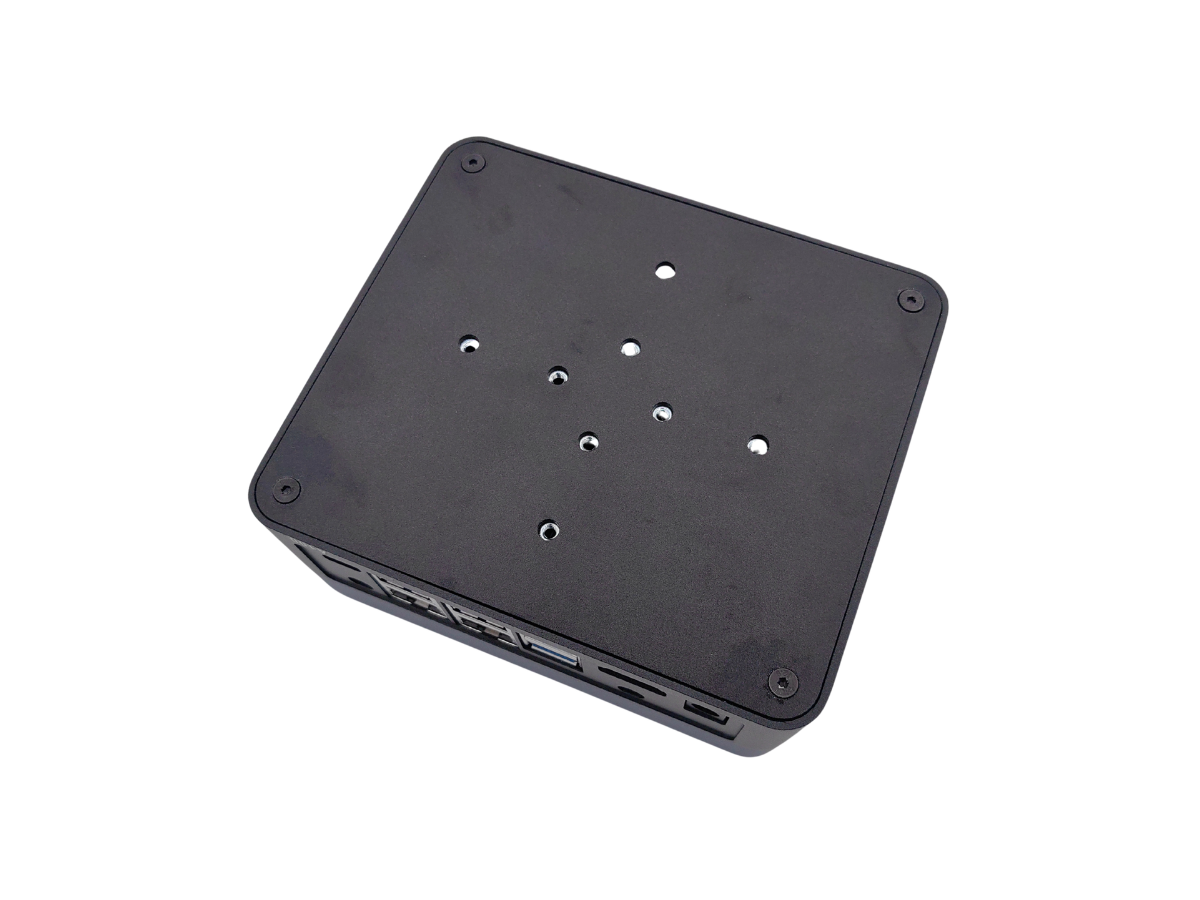
The physical review extends beyond the enclosure dimensions. A100's product material calls out cable routing, connector access, panel clearance, mounting direction and the surrounding equipment. Its antenna section also makes wireless functionality dependent on the selected configuration. A visible connector or antenna position in a photograph is useful for layout review; it is not a promise that every pictured function is included in every supplied system.[1]
Treat the heat path as part of the system
The A100's finned exterior makes the thermal structure visible, but it does not by itself establish a temperature rating. Domify describes a heatsink-oriented aluminum enclosure whose contact arrangement and installation conditions can be reviewed for the project. Its broader engineering offering considers workload, mounting orientation, ambient conditions and service access together. The practical question is how the selected configuration behaves in the intended installation under sustained work.[1,4]
NVIDIA's Jetson guidance provides useful context for that distinction. It separates developer kits used for development and prototyping from production modules, and identifies the carrier board, power and thermal solution as parts of a complete system. That does not identify which hardware Domify supplies inside A100. It explains why a platform family name alone cannot substitute for a confirmed system configuration.[3]
A prototype should answer the installation questions
Domify's OEM and ODM material connects platform selection with enclosure dimensions, interface planning, internal mounting, prototype review and small-batch support. Here, OEM and ODM refer to its work supporting manufacturers' own equipment and designs. The published process offers a way to bring the computing and mechanical requirements into the same review. It does not establish a completed deployment, a production guarantee or an independently tested customer outcome.[4]
For a vision project, the useful handoff is consequently more concrete than a request for an AI computer. It includes the workload, peripheral and interface list, available space, mounting direction and operating conditions. Those inputs allow the proposed system to be evaluated as part of the machine. A100's public story is about coordinating those decisions before the configuration is fixed; its final suitability still has to be demonstrated for the application.[1,2,4]