The records are fresh
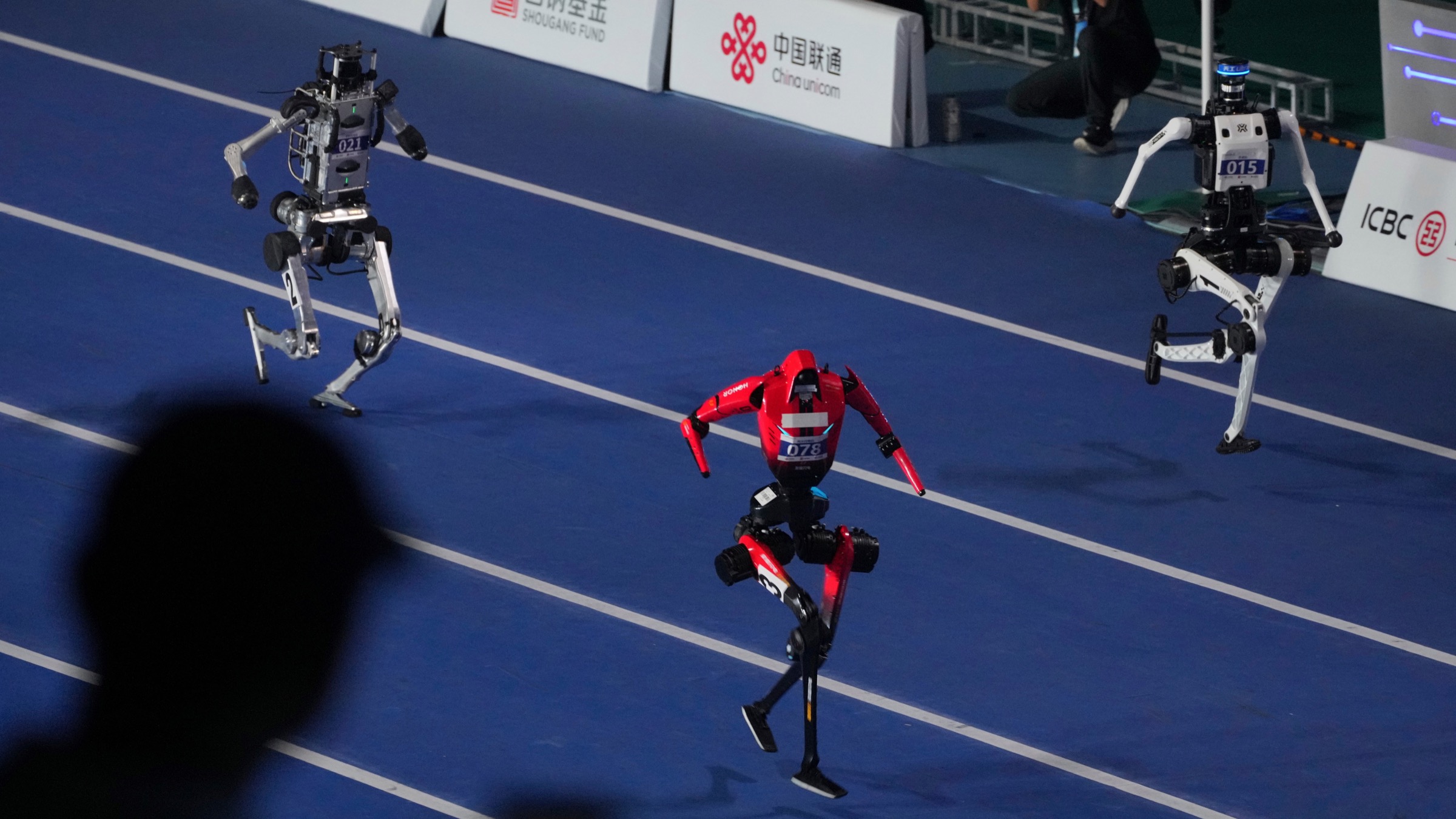
The Associated Press reported that a humanoid robot ran 100 meters in 9.39 seconds at the opening of Beijing's World Humanoid Robot Games on August 22, beating the human record of 9.58 seconds. A second robot reached 2.88 meters in the standing high jump. AP attributed both records to Beijing-based X-Humanoid and described the five-day event as a showcase, not as evidence that humanoids are ready for mass deployment. The event's headline numbers are therefore real competition results, but their operating meaning depends on the test conditions.[1]
The test condition changes the conclusion
The official rules context is not internally consistent. A Beijing government guide published on August 15 says all track and other competitive events require full autonomy except the 100-meter and 400-meter hurdle races. But an earlier city event page, published April 23, says the 100-meter race had been upgraded to a fully autonomous event. Neither opened record identifies which rule applied to the 9.39-second run. That document conflict means the sprint cannot yet be used as a clean measure of autonomous locomotion, even though the result may still show a meaningful improvement in dynamic robot performance.[2,3]
For buyers and researchers, the next checkpoint is not another record headline. It is an official result sheet or replay that states the control mode, repeatability, timing conditions and any human intervention, followed by the event's scenario tests in settings such as factories, hotels and emergency response. Until that evidence appears, Beijing has demonstrated a sharper public capability frontier while leaving the harder deployment question—whether the machine can reproduce the result without remote control—open.[1,2,3]