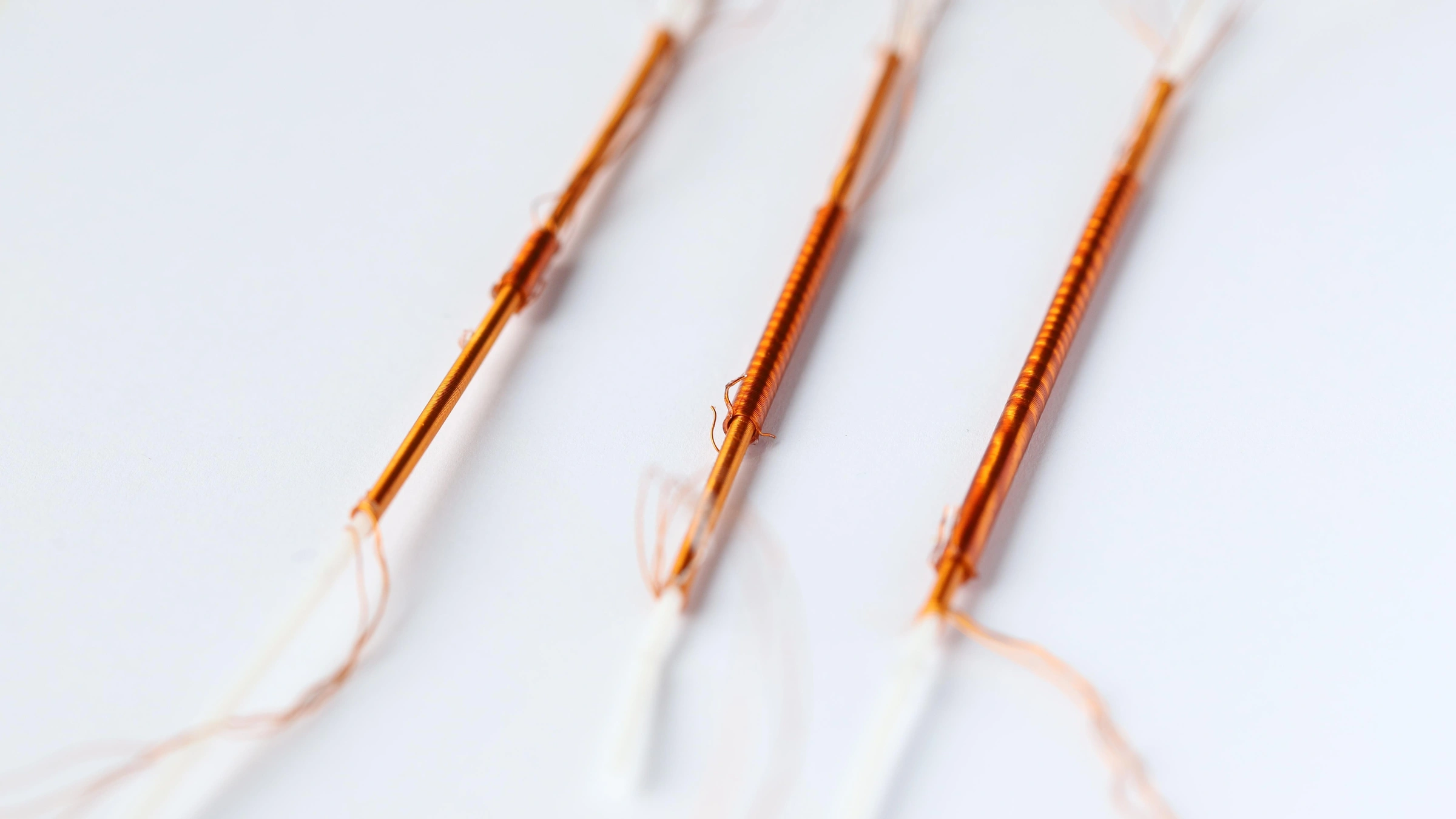
EPFL publicized a flexible, thread-like motor on 7 October, following a paper first published in Advanced Materials on 27 September. FiberMotor places two electrode-bearing fibers inside one another and uses electrical attraction to slide them in either direction. For soft-robotics developers, the useful change is an actuator that can follow a curved textile layout while offering travel set by fiber length.[1,2]
The university demonstrated a four-motor bundle lifting a 46-gram chocolate bar and moving a robotic finger. It also showed fibers incorporated into a prototype garment around a knee. Swissinfo reported the development while attributing its account to EPFL. These are laboratory and integration demonstrations, rather than independent validation of a walking-assistance product.[1,3]
The attraction is architectural. A conventional motor can require a rigid transmission to turn rotation into pulling motion. Here, one fiber travels through the other. An opposing movement can slide the fibers backwards instead of locking a gear train. That gives designers another way to distribute actuation through clothing, although it does not establish that the complete wearable is safe.[1]
The measurements need to stay separate. The paper reports no-load speeds above 85 millimeters per second and axial holding forces above 750 millinewtons per fiber. Holding a stationary load is different from moving it at peak speed. The authors leave a complete loaded force-speed-power map, including electrical-to-mechanical efficiency, to future work.[2]
The supporting hardware also matters. The experiments used a mains-powered high-voltage supply; speed tests used 3,000 volts. Silicone oil lubricates the sliding gap and supports electrical insulation. The authors identify oil confinement, repeated bending and on-body electrical requirements as integration work. Typical lifetimes exceeded 1,000 cycles, with some samples operating for 24 hours; electrical insulation breakdown was the most common failure. These observations are prototype evidence, not a service-life guarantee.[2]
Our reading is that the first adoption decision belongs in a development lab. A team can compare this sliding geometry with its current actuator on a specific textile layout and load. Counting fibers or quoting a holding-force peak cannot yet settle how much useful assistance a complete garment delivers per unit of power, weight or maintenance.[1,2]
EPFL says first author Sylvain Schaller has founded Elecsyor to commercialize the technology. The next useful evidence would connect that intent to a contained, powered garment: repeated loaded motion, measured electrical input, feedback after missed steps, and durability under bending. Progress on those tests would make the wearable claim more informative than another unloaded motion demonstration.[1,2]