Meta has built a humanoid prototype with Chinese startup Fourier and is developing another version, according to The Information, as reported by Reuters on October 31. Reuters attributed the account to people familiar with the initiative and said it could not immediately verify the report.[1]
The distinction matters. This is a report about development work, rather than a confirmed product launch. The accessible Reuters account provides no technical specification, release date, customer deployment or performance result. Details circulating on social media should remain attributed claims until the underlying reporting or company documentation supports them.[1]
What the public records show
Fourier already documents a humanoid called GR-3. Its official specifications describe a 1.65-metre platform weighing approximately 71 kilograms, with up to 55 degrees of freedom—the independent axes of movement available to the robot, depending on its hand configuration. The documentation also lists teleoperation support, allowing a person to control the robot remotely. These are specifications for Fourier's GR-3, not evidence about Meta's reported prototype.[2]
Meta's public Muse page describes a personal AI agent that works through apps and a browser, including an isolated computer environment. The page does not establish that Muse controls a humanoid robot. A software agent managing digital tasks and a machine handling physical objects require different evidence of capability.[3]
The next useful test
If the reported collaboration is confirmed, it would suggest a division of work in which an AI developer can use an established robotics company's hardware while developing its own software. That is a plausible interpretation of the report, rather than a disclosed agreement or proven product strategy.[1,2]
The next meaningful evidence would be a statement from either company identifying the hardware and software roles, followed by demonstrations that disclose the task, human assistance, failure recovery and repeated results. Until then, a prototype report establishes a development lead to follow; it does not establish a household robot ready for customers.[1,2,3]
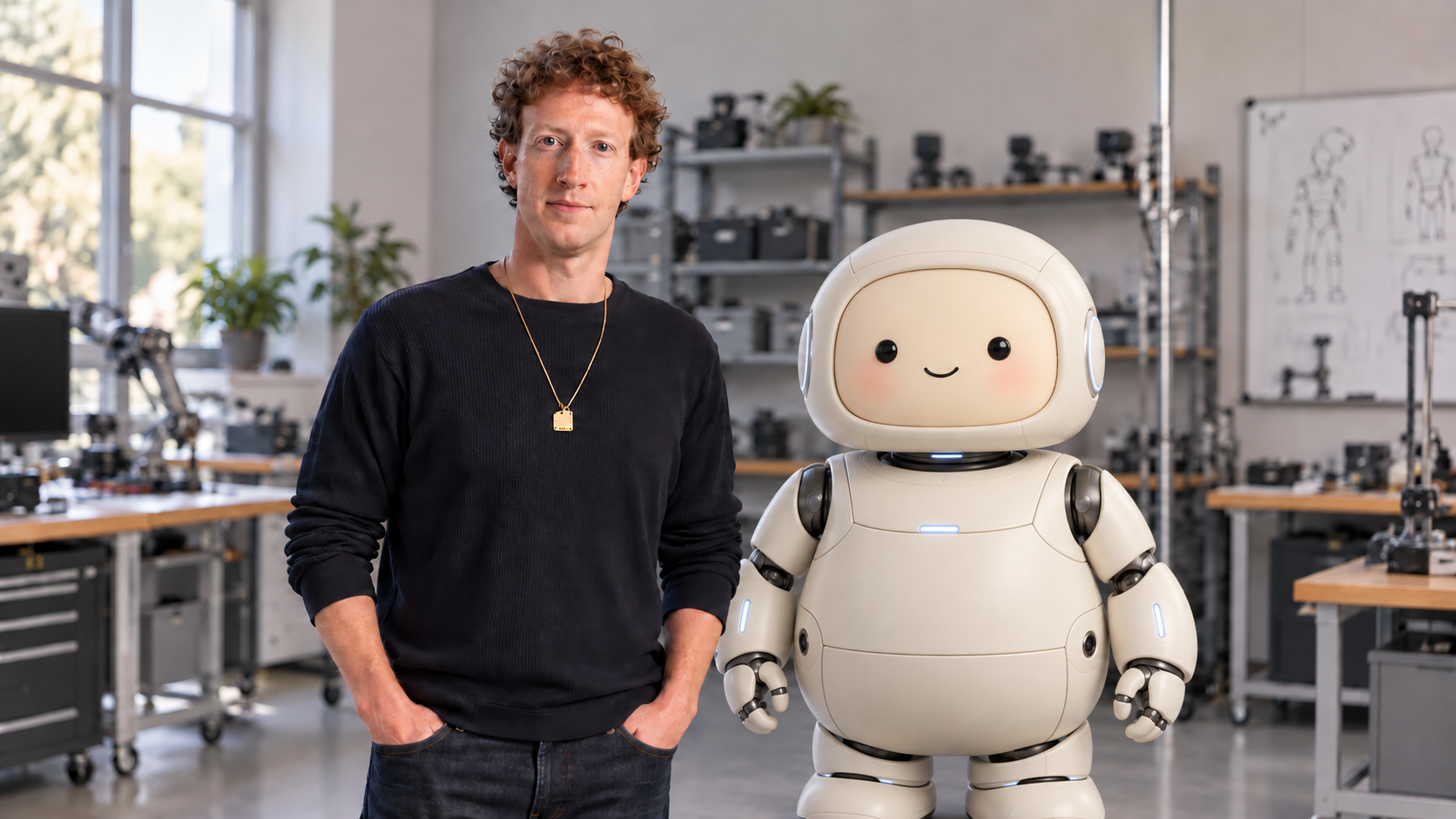
Cover illustration: an AI-generated concept of Mark Zuckerberg beside an imagined mechanical robot inspired by Muse’s branding. It is not a photograph, reconstruction or verified depiction of the reported Meta–Fourier prototype. Zuckerberg’s identity reference is Jeff Sainlar’s Meta-provided September 2025 portrait; the generated portrait adaptation is shared under Creative Commons Attribution-ShareAlike 4.0. Reference: https://commons.wikimedia.org/wiki/File:Mark_Zuckerberg_(2025).jpg. Licence: https://creativecommons.org/licenses/by-sa/4.0/.[3]