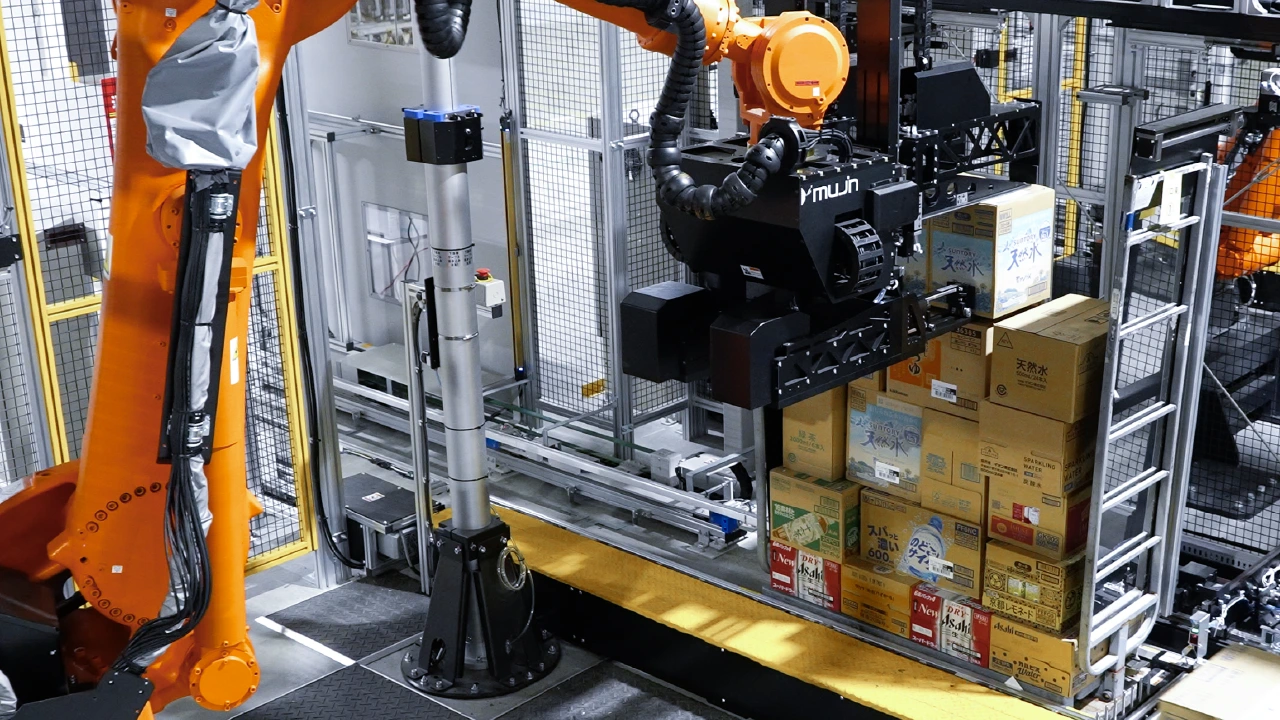
Aeon and robotics supplier Mujin put a new grocery distribution hub into full operation on October 29 in Kawaguchi, Japan. Kawaguchi Higashi XD is the retailer’s first centre to automate the connected steps from store-specific sorting through mixed-load stacking, according to their joint announcement. Logistics publication LNEWS separately reported the facility’s opening to the press that day.[1,2,3]
The change extends a partnership announced in October 2023. At Aeon’s Fukuoka centre, which began operating in July 2024, automation covered retrieval from automated storage through feeding goods into a sorter. Kawaguchi adds the difficult outbound step: arranging cases of different sizes, weights and combinations into loads for individual stores.[1]
Mujin says the system simulates a stacking plan for each shipping order, then uses three-dimensional vision to check the actual load as a robot places goods onto a wheeled cart rack. If cases shift or a load collapses during stacking, the controller adjusts robot motion to the observed state and continues work. That is the company’s description of the recovery mechanism, rather than an independently measured recovery rate.[1]
The warehouse execution system, or WES, also coordinates robot arms, automated guided vehicles and shuttle storage with instructions sent to workers through handheld devices. Store orders and dispatch deadlines determine supply sequences and work assignments. The system displays shipment progress, equipment utilisation and completed work, keeping people inside the operating workflow.[1,3]
For a buyer, the meaningful advance is the connection between planning, live load recognition and the rest of the dispatch process. A successful nominal stack is only one part of that job. The next useful evidence would track shifted-load incidents, automatic recoveries, human interventions and completed store orders over a defined operating period.[1,2,3]
The opened announcement does not provide that intervention ledger, a matched before-and-after labour study or a payback period. LNEWS corroborates the site and workflow, but does not independently measure the control system’s reliability. Full operation is a deployment milestone; its economic value still depends on sustained throughput and the work needed when recovery fails.[1,3]