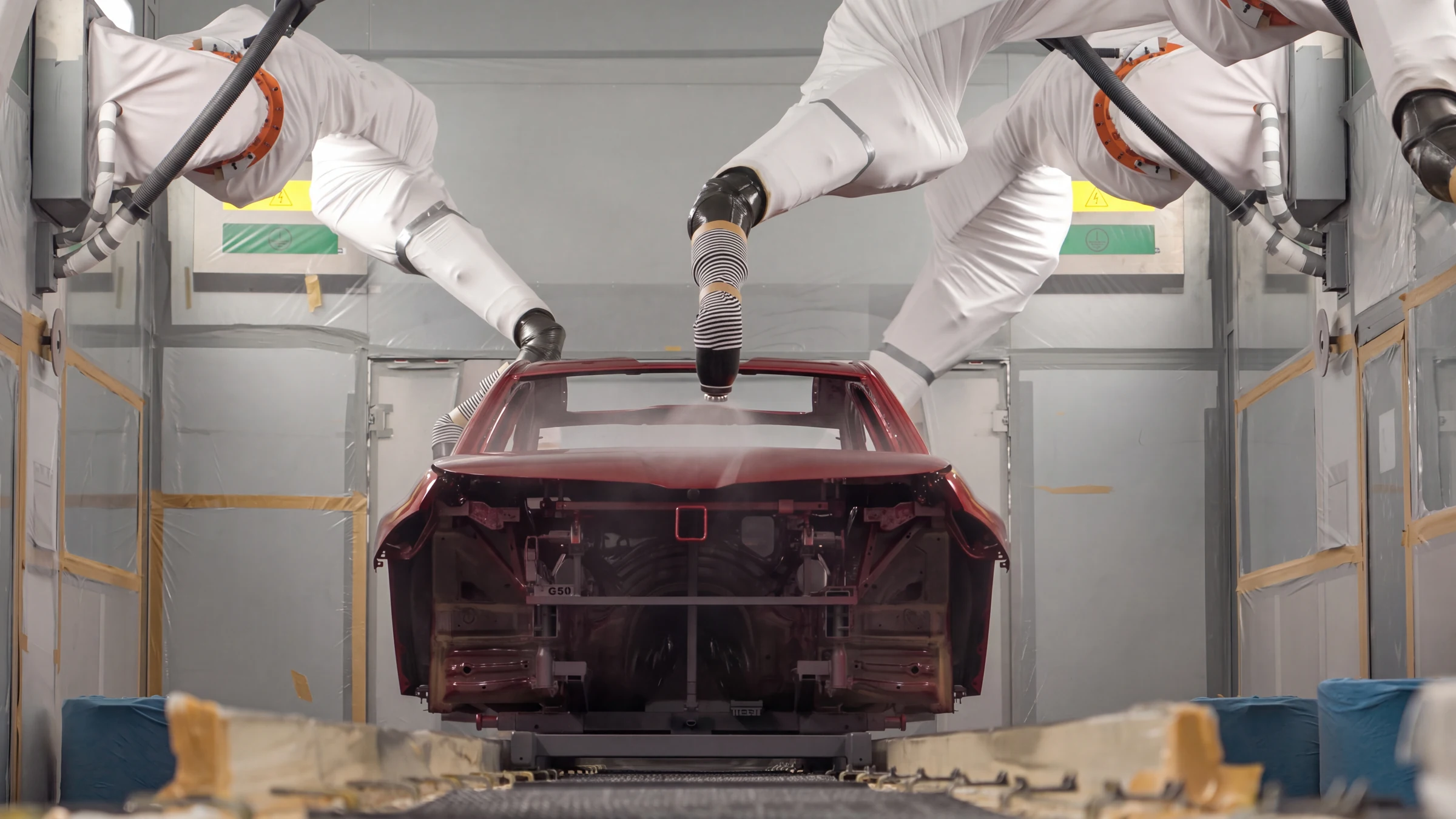
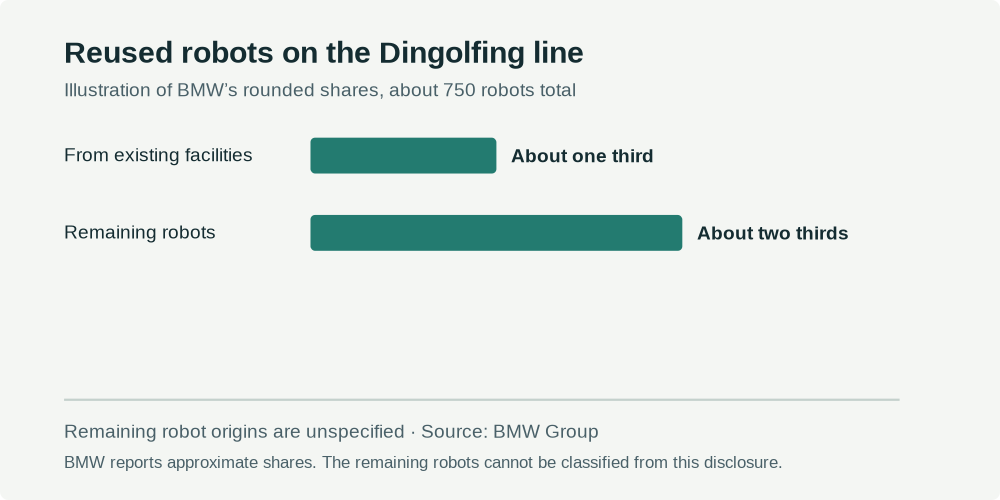
BMW says about a third of the roughly 750 robots on its new Dingolfing body-shop line came from existing production facilities. The line sits inside an existing building. BMW disclosed the figure on November 3 as the eighth-generation 3 Series entered production. For a buyer budgeting a line, the practical question is how many tasks existing robots can handle after requalification and how many call for new purchases.[1]
North American buyers placed more orders
The Association for Advancing Automation recorded 10,989 North American robot orders worth $723.5 million in the third quarter. That was 22.9% more units and about 16.3% more order value than in the second quarter, based on the association’s published aggregates. The implied order value per unit fell about 5.4% sequentially. Changes in the mix of systems or orders could move that ratio. The public totals lack matched transaction prices.[2,3]
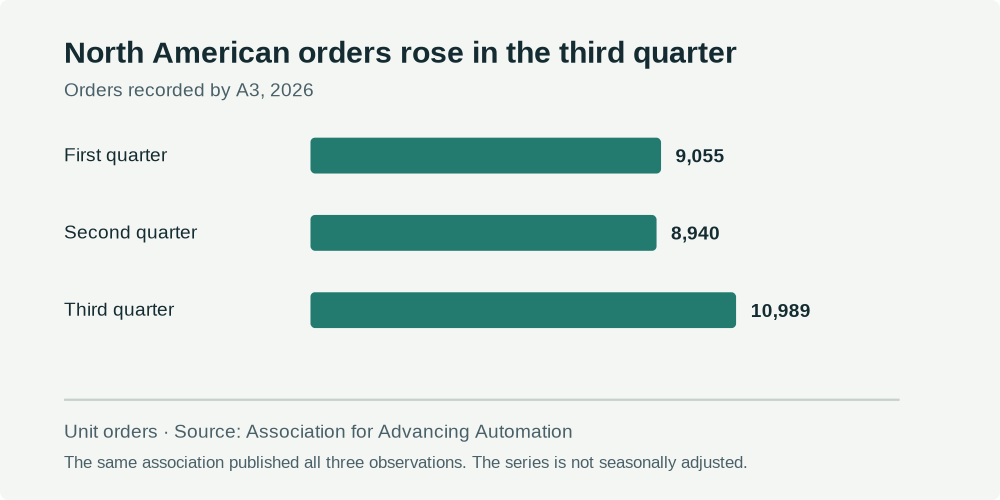
The change was uneven. Automotive component orders rose 90.4% from a year earlier and semiconductor, electronics and photonics orders rose 97.6%. Automotive manufacturer orders rose 7.5% in the quarter and remained down 17% through nine months. Those growth rates show where demand accelerated. Sector-level prior counts would be needed to measure how much each sector contributed to the total increase.[2]
Japan’s member figures separate orders and shipments
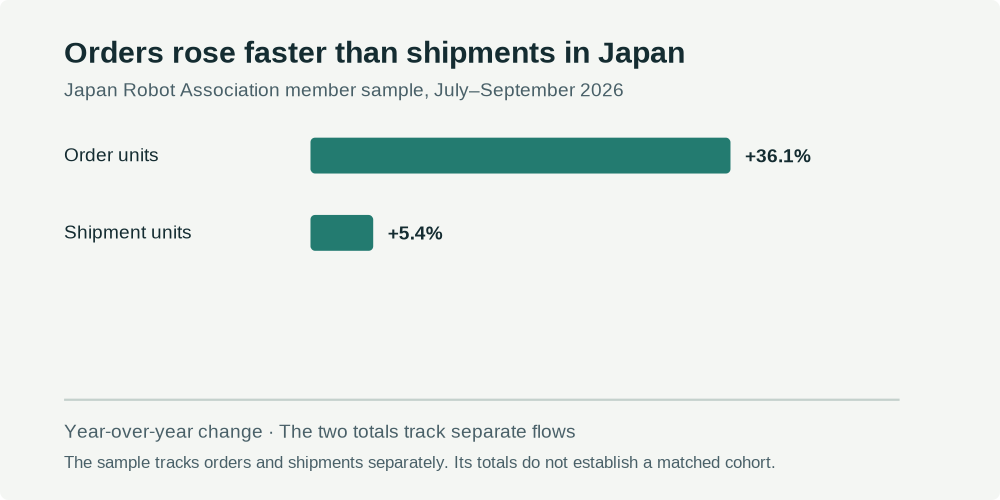
The Japan Robot Association’s members reported 67,003 orders and 50,403 shipments in the same quarter. Order units rose 36.1% from the prior year, while shipment units rose 5.4%. The member series covers equipment including electronic component mounting machines. Its scope and reporting geography differ from A3’s North American customer orders. Order and shipment cohorts also differ, so subtracting the two totals cannot tell a buyer the backlog.[2,5]
Teradyne separately reported $96 million in third-quarter Robotics revenue. That supplier segment includes collaborative and mobile robots. It adds a financial view alongside the order data, with its own product mix and revenue recognition. It gives no conversion rate for A3 orders.[6]
A line budget needs an equipment inventory
Dingolfing gives the comparison a site-level denominator. BMW’s stated share implies roughly 250 robots came from existing facilities if the rounded total and share are used literally. The origin of the remaining robots is unspecified. The production photo shows robots at the plant; BMW’s equipment disclosure supplies the reuse figure.[1]
For an existing plant, ask the integrator to separate transferable assets, equipment requiring changes and new procurement. Price controls integration, requalification and commissioning as separate work. For a line with few reusable assets, dated supplier quotes and committed delivery windows are more useful than the quarterly order-growth rate.[1,2,5]
What would change the readout
The next comparable A3 and Japanese releases will show whether order growth persists and whether shipments accelerate. A matched cohort with order, shipment and acceptance dates would measure conversion time directly. A Dingolfing asset ledger with the source and acceptance date for each robot would replace the rounded reuse estimate and establish how many units were newly purchased.[1,2,5]