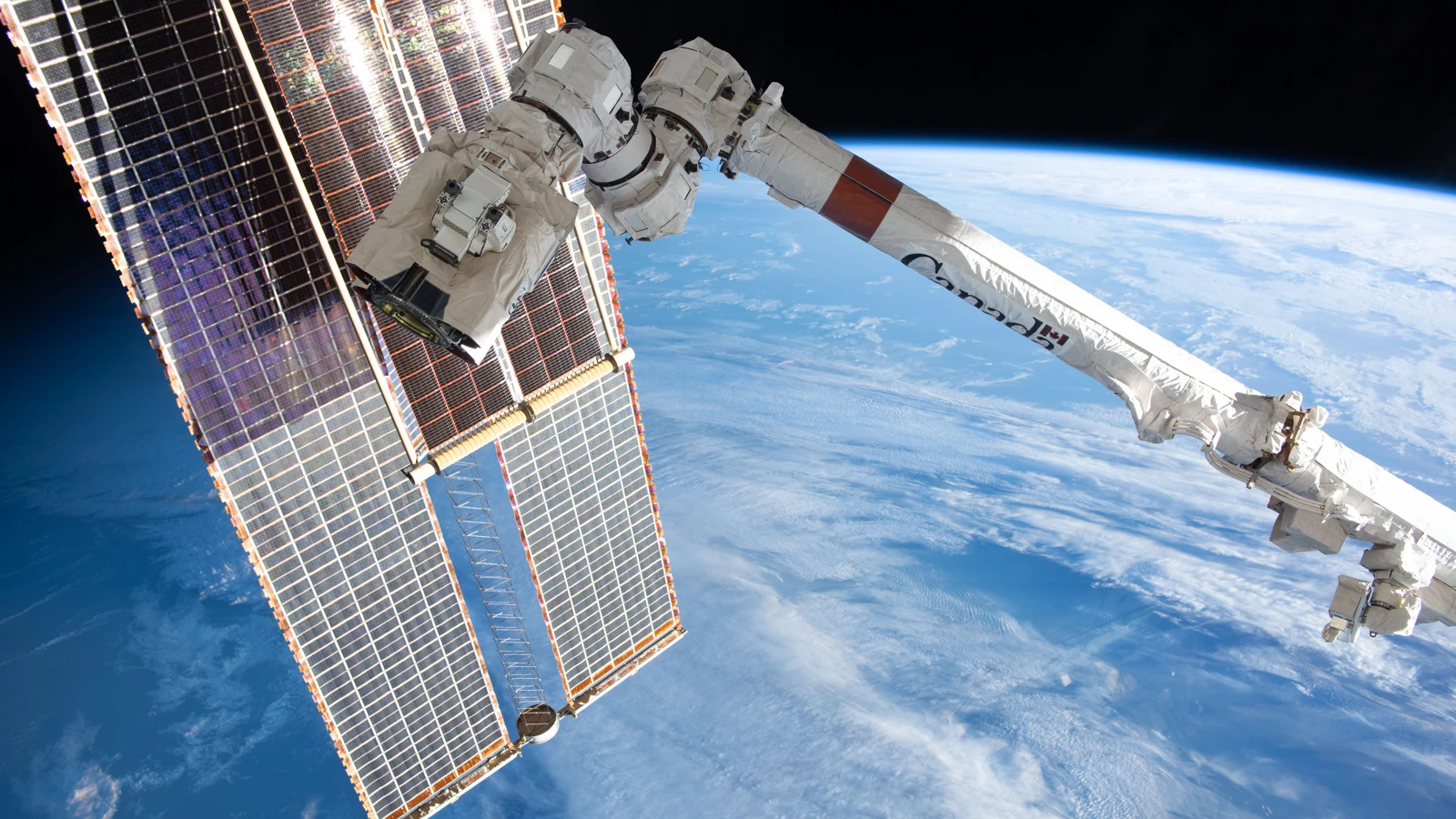
NASA and the Canadian Space Agency report that astronauts completed the International Space Station’s eighth and final roll-out solar-array installation on November 5. The six-hour, 59-minute spacewalk closes the upgrade campaign begun in 2021. This is the completed milestone that remained a planned task in our November 3 coverage.[1,2]
The Canadian agency identifies the operating chain. NASA astronauts Luke Delaney and Jessica Watkins manoeuvred Canadarm2 from inside the station to assist Anil Menon and Joshua Kutryk outside. Robotics specialists in Houston and Longueuil monitored the arm’s condition, while a separate ground communicator supported the spacewalk. The mechanism is coordinated human operation, rather than the robot independently deciding and executing the installation.[2]
JAXA’s November 6 operation record independently lists installation and deployment of the eighth array as complete. Its account also records the same spacewalk duration. Together, the records move the status from procedure preparation to accomplished mechanical work; they do not quantify how much time the robotic arm saved.[2,3]
NASA’s following-day account describes the campaign as increasing station power-generation capacity from 160 to 215 kilowatts. Those are system-capacity figures for the array upgrade, not a measured productivity improvement attributable to Canadarm2. The completion record is evidence that the maintenance workflow delivered its installation task, not a controlled comparison against a spacewalk without robotic assistance.[1,2,3]
For operators, the useful boundary is between task completion and performance attribution. A mature robotic platform can enable access and positioning while people retain installation and oversight responsibilities. The next useful evidence would connect this completed hardware change to sustained power availability and research operations, while separately measuring the arm’s contribution to work time or risk.[1,2]