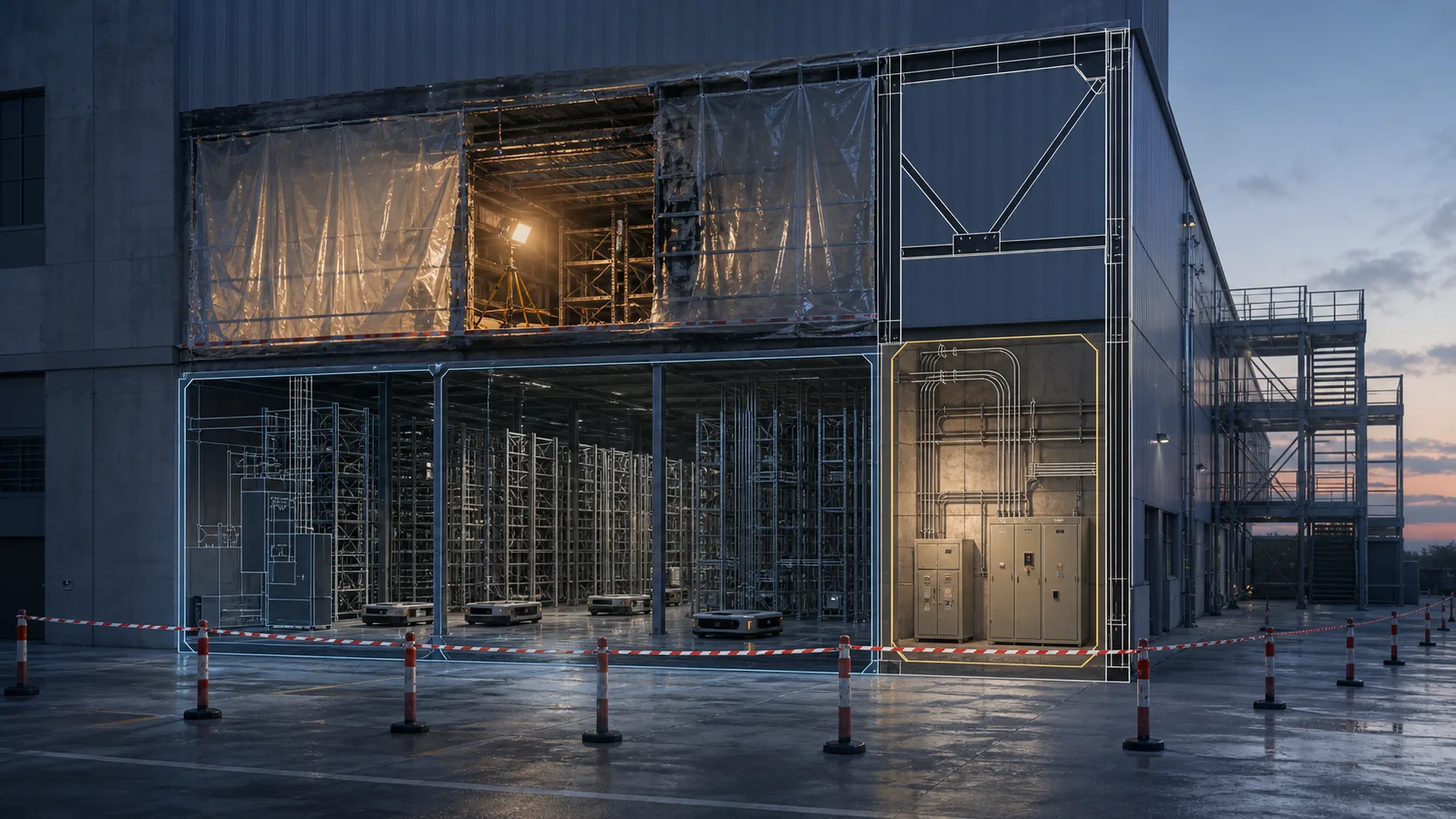
What happened
The fire at Coupang’s 32 logistics center in Incheon was fully extinguished at 8:35 p.m. local time on July 22, about 109 hours after it began on July 18. The event required a large regional response and forced nearby residents to evacuate, according to Korean reporting based on the Incheon Fire Headquarters.[2,3,4]
The next phase is no longer suppression. After a building-safety check, authorities began preparing a joint scene examination to establish the ignition point, determine how the fire moved through the facility and measure the damage. The first public reports still describe the cause as unknown; no opened record assigns ignition to the warehouse’s robots, batteries or any other single system.[1,3,4]
What the new evidence changes
South Korea’s National Fire Agency said it was operating a central fire joint investigation team for the incident. The team includes public fire investigators, the National Fire Research Institute, electrical-safety and standards bodies, local fire authorities, private fire-analysis institutions and academic experts. Its stated work includes detailed inspection and fire-reconstruction analysis rather than a preliminary visual judgment.[1,4]
That matters for robotics operators because the relevant control surface is wider than a battery pack. A July 20 briefing reported that hundreds of lithium-battery robots were stored on the fifth floor, creating a documented containment exposure. But the new investigation scope points to warehouse equipment, electrical facilities, stored materials, structural weaknesses, fire spread and possible secondary harm. The evidence supports an exposure map, not a causal finding.[1,4,5]
The decision delta is therefore narrower and more useful than a claim that automation caused the fire. Dense automated warehouses need a safety case that connects power, charging, inventory, building compartments, access restrictions, emergency response and post-incident evidence. Until investigators publish a finding, operators cannot know which layer failed or which control should change; they can know that robot inventory is one part of a coupled facility risk.[1,3,5]
The strongest next checkpoint is the joint team’s first substantiated finding on ignition, fire spread or structural and electrical contribution. A corrective action, inspection order or operating change would turn this from an incident timeline into a reusable safety lesson. Until then, the public record supports no conclusion that the robots or their batteries started the fire, and no conclusion that the facility’s future controls are adequate.[1,2,3]