The robot floor became a containment boundary
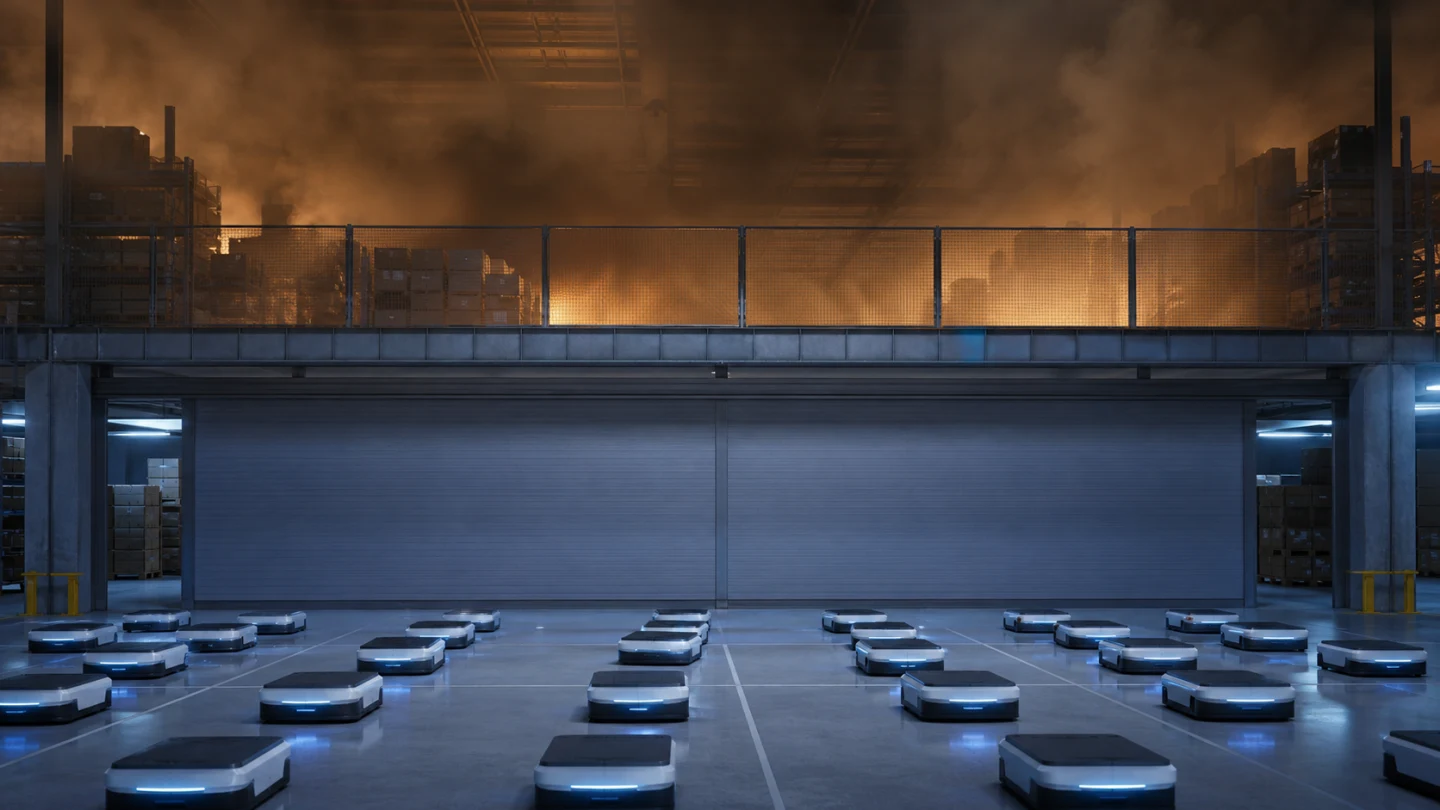
A July 18 fire on the sixth floor of Coupang's Incheon logistics center reached initial control at 8 p.m. local time on July 20, after about 61 hours; residual suppression continued. Earlier, NewsPim and The Dong-A Ilbo reported Incheon West Fire Station chief Heo Seok-gyeong saying crews prioritized stopping spread to the fifth floor, where hundreds of lithium-battery logistics robots were located. He compared their combined battery modules with about 20 of the largest batteries used in domestically produced vehicles.[2,3,7]
Coupang Fulfillment Services said all site workers evacuated. Yonhap reported that 121 people left the facility, two firefighters were treated for smoke inhalation and exhaustion, and residents within 116 meters of a loading ramp were ordered to evacuate amid structural concerns. An earlier NewsPim account listed one firefighter receiving treatment, so the article uses Yonhap's later two-person tally and records the discrepancy.[1,2,4]
An exposure, not an ignition finding
The distinction is the safety signal. The fire started above the robot fleet, the fifth floor had not burned when the chief spoke, and later reporting said crews prevented spread to that floor through initial control. The cause remained under investigation, and nothing in the opened record shows that a robot or battery started the fire. What the official briefing does show is that the fleet's battery inventory became part of the containment problem. For warehouse operators, that moves battery safety beyond an individual robot toward fleet inventory, placement, compartmentation, suppression access and emergency planning.[2,3,4,7]
South Korea's transport ministry also formed an interagency task force to review logistics-facility fire safety from design and construction through operation and management. The review is not starting from zero: the Korea Institute of Civil Engineering and Building Technology opened a 2026 pilot program for logistics-facility fire-safety systems in March. The next evidence should come from the joint cause investigation, a verified battery inventory, the performance of fire compartments and any resulting design or operating requirements. Until then, the robot fleet is a documented exposure, not a documented cause.[5,6]