Eni and Generative Bionics signed a memorandum of understanding on September 30 to evaluate industrial uses for the Italian developer’s GENE.01 humanoid. Inspection, teleoperation and remote assistance are among the proposed applications. The announcement identifies areas to investigate rather than a robot purchase or a completed installation.[1]
A component route into industry
The agreement gives Eni’s chemicals business, Versalis, a role in materials and components. It specifically targets the robot’s foot and shoe system, including weight, impact absorption, grip, durability and assembly. Sensor-equipped footwear also has a possible industrialisation and commercialisation route. These are development objectives; no measured improvement is disclosed.[1]
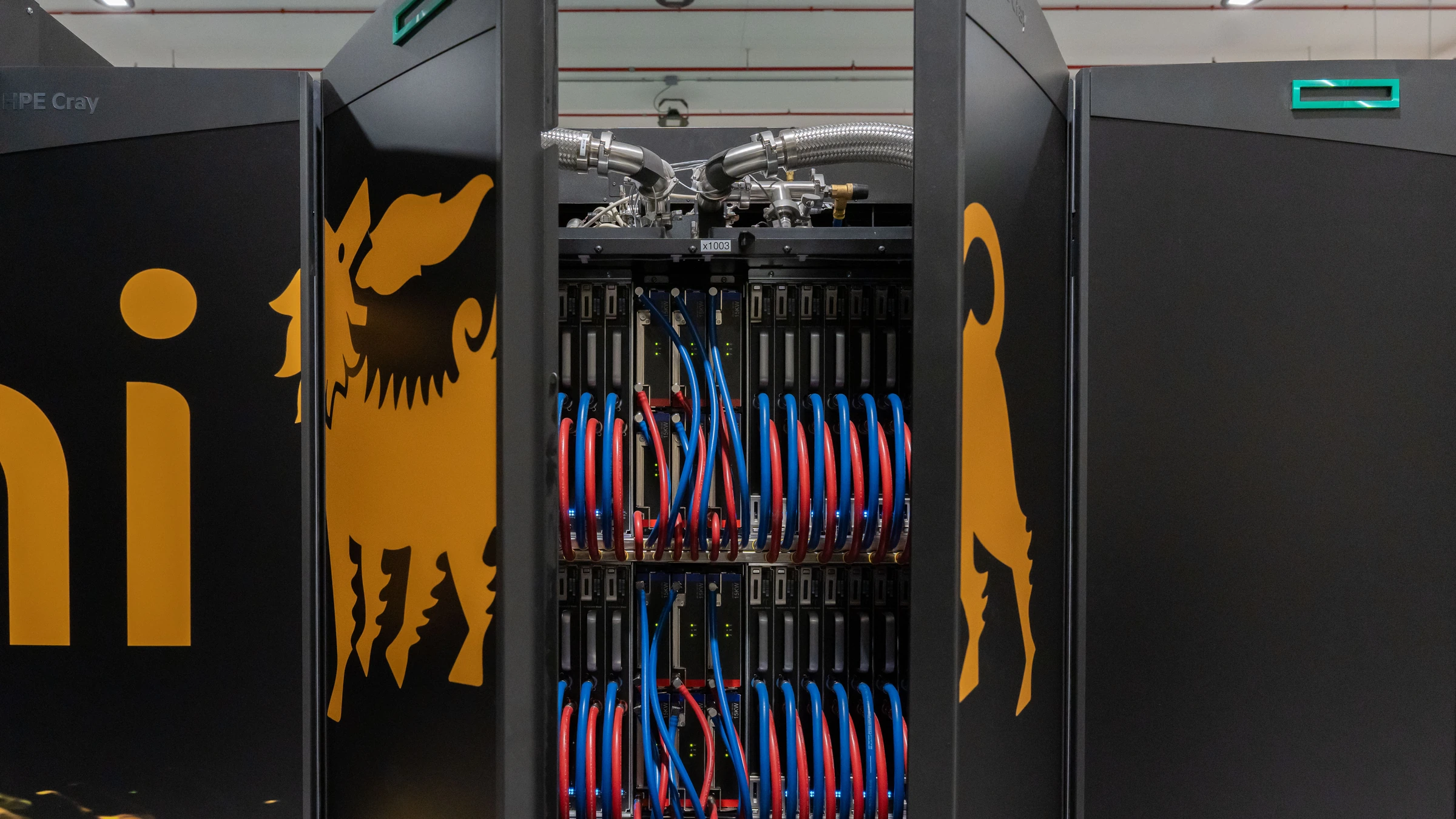
Eni will consider potential industrial sites and access to its high performance computing capacity. The public statement names no Eni trial site, robot quantity, delivery date or computing allocation. The cover photograph shows existing HPC6 infrastructure; the agreement does not identify that machine as the proposed resource.[1]
Development partners are the current milestone
This builds on a relationship established through Eni Next’s participation in Generative Bionics’ December 2025 financing. The Italian Institute of Technology’s announcement describes a company formed in 2024 from its humanoid research and licensed technologies. That institutional record establishes the development lineage, not a record of industrial uptime or paid Eni robot use.[3]
The European Commission’s July account places GENE.01 within a broader product-development effort: it records the platform’s technical release, simulation description and a four-year development partnership with Fincantieri. The Commission also identifies motion control, sensing and embedded software as necessary parts of moving robots beyond research environments. Its account supplies context, not validation of the new Eni applications.[2]
Read together, the records show industrial partners contributing different inputs to a developing platform. Eni’s materials and possible computing access make the relationship broader than a prospective end customer. The practical question is whether those inputs become a repeatable task at an identified site, with an operating boundary buyers can evaluate.[1,2,3]
What would turn the pact into operating evidence
A useful next disclosure would name the task, site and duration of a trial, then separate remote operation from autonomous work. For the footwear, it would provide test conditions and comparative results for grip, wear and assembly. Buyers could then judge which part of the programme reduces integration or maintenance work, and which remains experimental. No such outcome is established by signing the agreement.[1,2]