FANUC’s latest order growth is broader than its robot business. In results released on October 23, the Japanese automation supplier reported 306.0 billion Japanese yen of total orders for July–September 2026, up 49.0% from a year earlier. Robot orders rose 12.6% to 103.4 billion yen.[1]
The largest increase came from the separate factory-automation division, which includes machine-tool controls and servos. Its orders rose from 48.8 billion to 112.2 billion yen. That changes how suppliers and factory operators should read the headline: stronger spending on manufacturing equipment does not translate one-for-one into demand for complete robots.[1]
Where the increase came from
Using the rounded figures in FANUC’s presentation, total quarterly order value increased by 100.7 billion yen year on year. Factory automation contributed 63.4 billion yen, about 63% of that increase. Robots contributed 11.6 billion yen, about 12%. These are contributions to growth in order value, not market shares or counts of machines.[1]
The distinction does not erase the robot recovery. Robot sales reached 98.2 billion yen, up 7.2% year on year, and orders increased 5.6% from the preceding quarter. RobotsBeat’s October 24 coverage separately reports those robot figures; it relies on the same company presentation and does not provide an independent field-performance audit.[1,3]
FANUC’s interim filing shows that the wider business improved as well. For the six months ended September 30, sales were 473.708 billion yen, up 16.2%, and operating income was 116.662 billion yen, up 35.7%. Those six-month group totals must stay separate from the three-month divisional order comparison.[2]
The next test is conversion
For robot integrators, higher order intake is a demand signal. It is not an installation ledger. Order value cannot reveal the number of robots commissioned, productive operating hours, intervention rates or customer payback. Sales likewise measure recognized business rather than the quality of each customer’s operation.[1,2]
The practical next checkpoint is whether robot sales continue to follow orders over subsequent quarters, alongside customer evidence of accepted installations and useful operation. Compare the same division and period each time; do not combine the factory-automation surge with robot orders to imply a uniform rollout.[1,2]
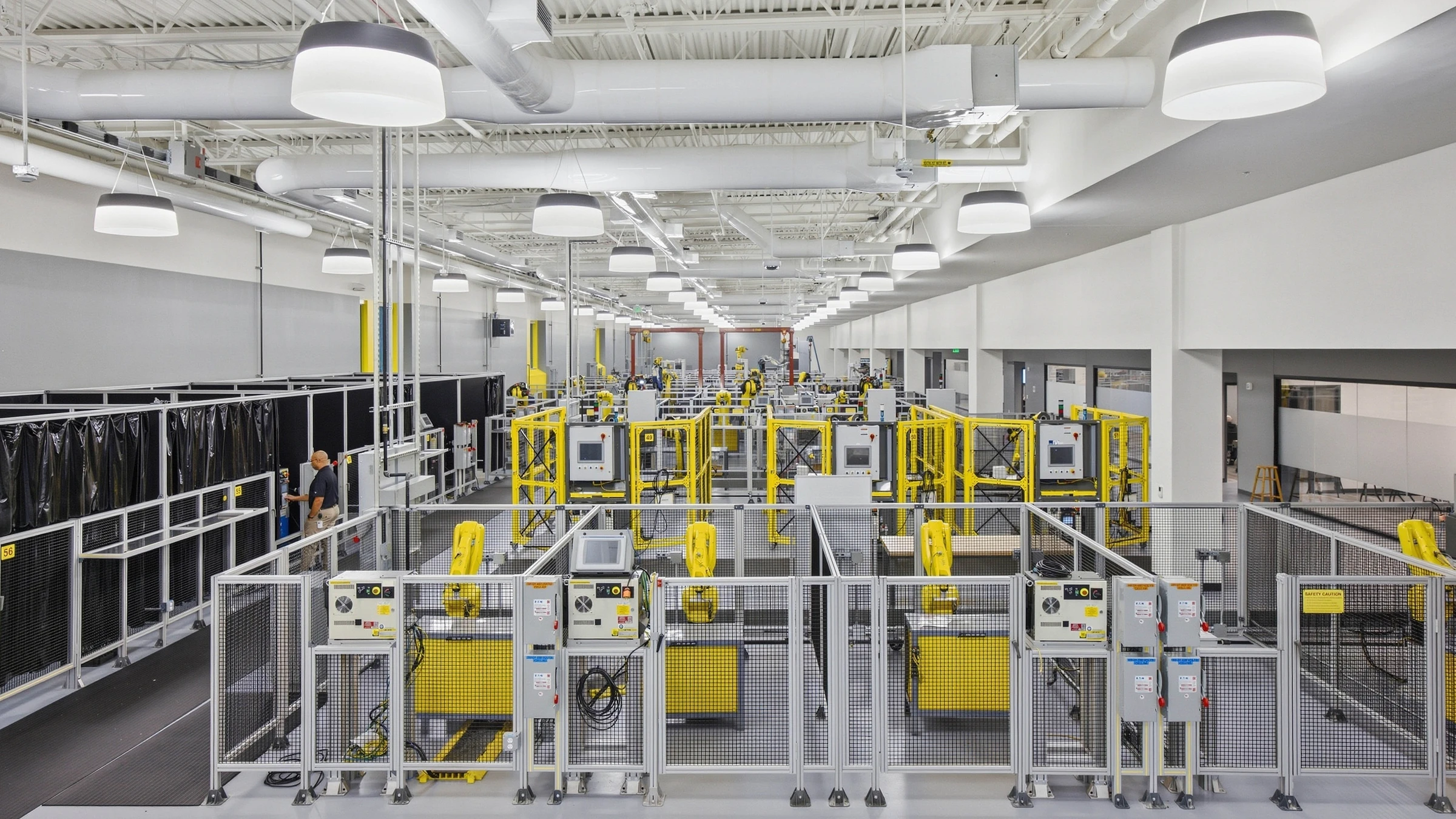
The context photograph shows FANUC America’s hands-on industrial robot training lab. It illustrates the company’s robot systems and training infrastructure; it does not show the factories placing these orders. FANUC America supplied the image for editorial coverage.[4]