What changed
Hyundai Motor Group on July 24 in San Francisco outlined a Physical AI roadmap around its manufacturing, vehicle and robotics operations. The group said it is developing a Robot Reference Platform with NVIDIA, building on a supply agreement for 50,000 NVIDIA Blackwell graphics processors, and plans autonomous-ready IONIQ 5 production with Waymo. Hyundai also described a United States robot facility targeted at up to 30,000 units of annual capacity by 2028, an approximate 9 trillion won Saemangeum AI Valley investment and a 42 trillion won, decade-long Yeongnam industrial-hub plan.[1,2,3]
South Korean broadcaster SBS and ChosunBiz independently reported the roadmap after Executive Chair Euisun Chung's San Francisco meeting and summit appearances. SBS reported that Hyundai and NVIDIA had decided to invest about 3 billion dollars in Korean AI centers; Hyundai's own record confirms the broader collaboration and infrastructure direction but does not state that figure. The distinction matters: the current evidence is a company strategy and capital-allocation plan, not a completed operating network.[1,2,3]
The decision delta
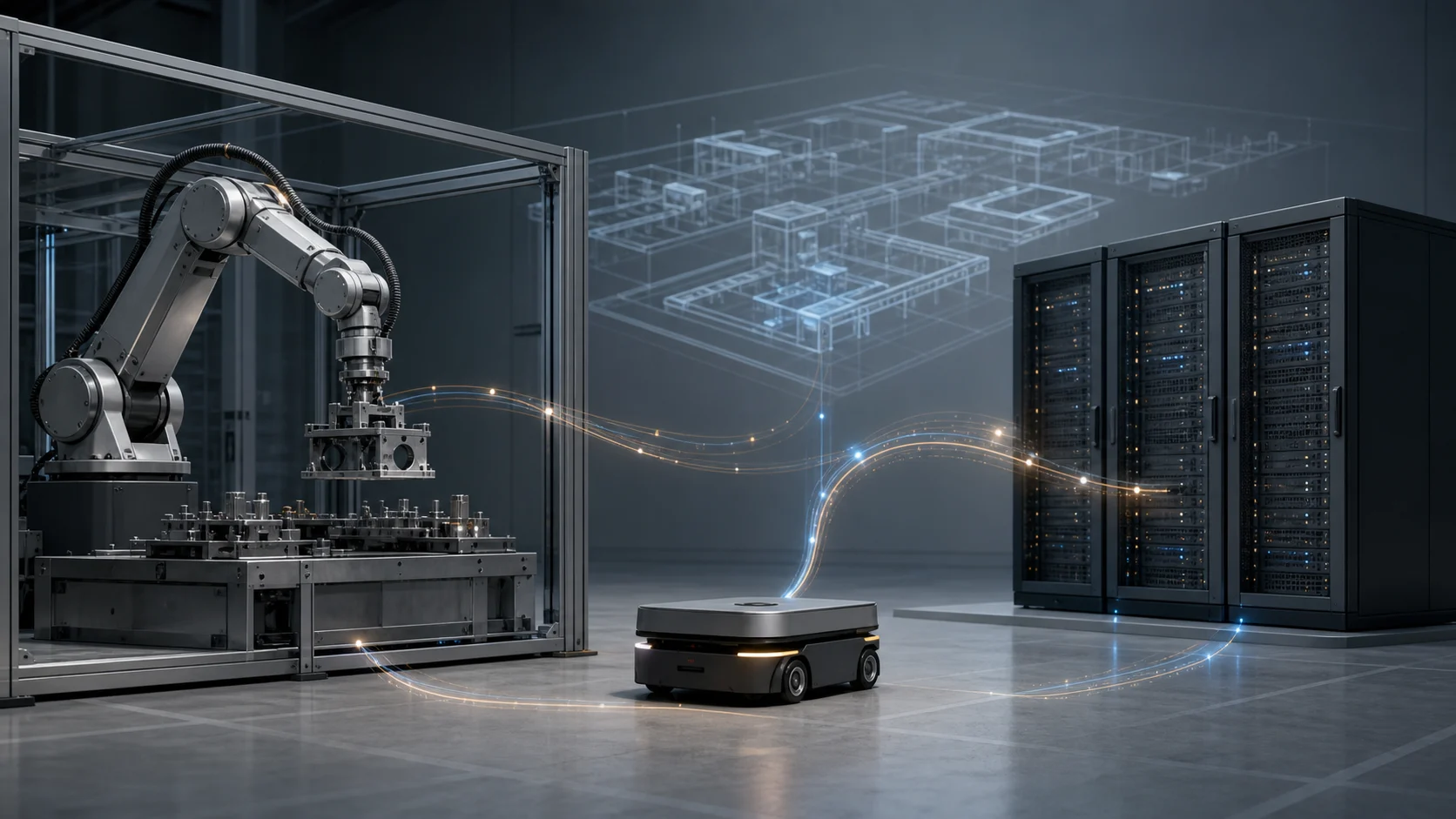
The ordinary frame is Hyundai using Boston Dynamics to enter humanoid robotics. The new evidence is a wider stack: manufacturing sites, vehicle data, robotics hardware, NVIDIA compute, Waymo autonomy and Google DeepMind models are being positioned as one reinforcing system. The mechanism is Hyundai's proposed data flywheel, in which operations generate training and validation data that can be returned to machines and factories. If executed, that could strengthen Hyundai's integration and capacity advantage; it does not yet prove better robot performance or a new customer market.[1,2,3]
The strongest limit is execution. None of the opened sources establishes that the Korean hubs, Robot Reference Platform or United States robot facility is complete, accessible to outside developers, producing robots, or serving a named customer. They also provide no output, uptime, intervention, training-data volume or unit-economics denominator. The next measurable checkpoints are a platform release with named users, construction or commissioning evidence, disclosed robot production, and operating results from an identified Hyundai site.[1,2,3,4]