What happened
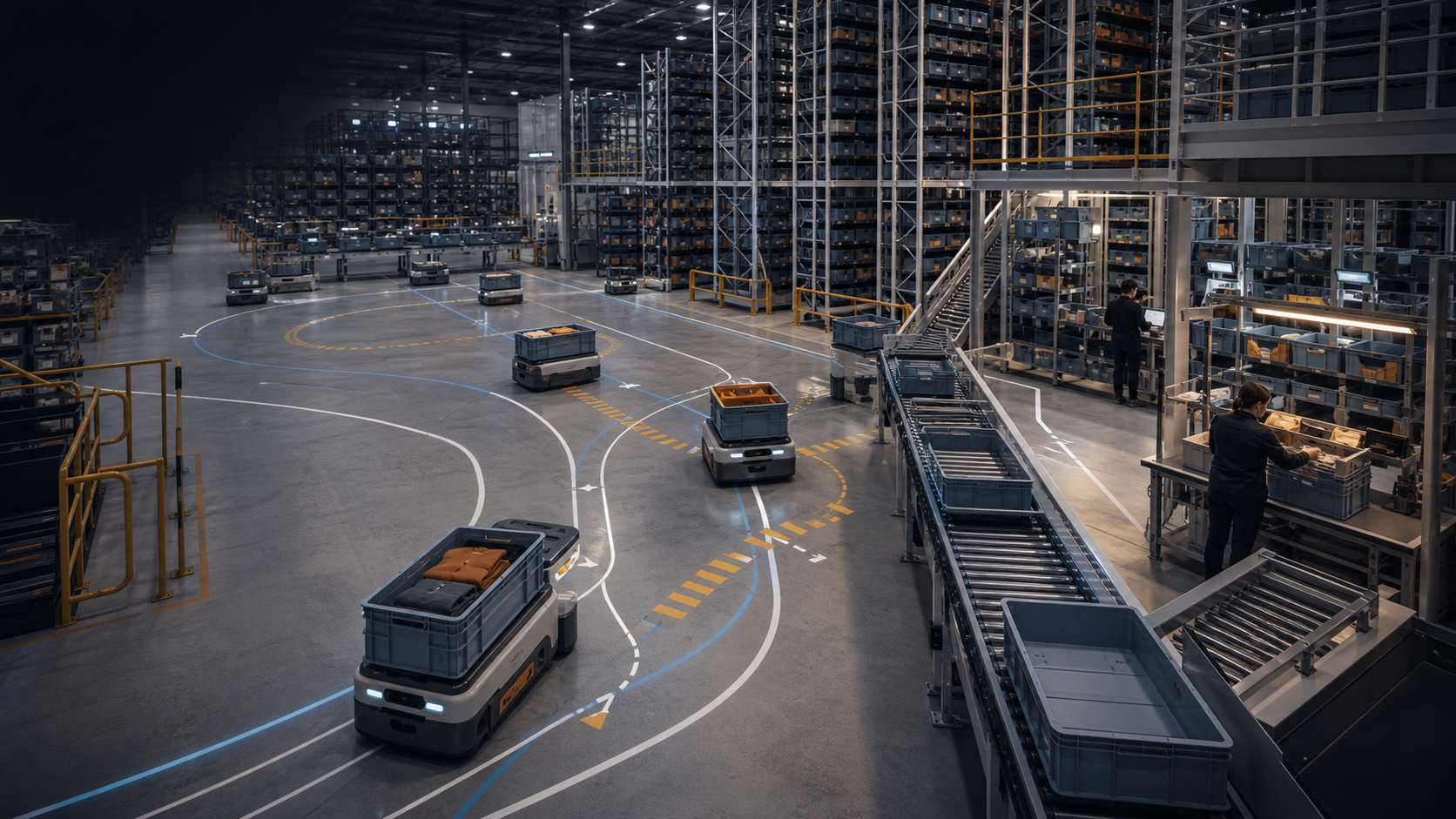
A new Hai Robotics customer case study puts hard fleet numbers on LPP Logistics' fulfillment center near Bucharest: 948 machines, comprising 278 automated case-handling robots and 670 fast-transit companion mobile robots. The facility supports LPP's Reserved, Cropp, House, Mohito and Sinsay brands across Romania, Bulgaria, Serbia, Greece and Hungary. Independent Romanian coverage from Profit.ro and Economedia also identifies the site, the fleet and its capacity for up to 7.5 million garments.[1,3,4]
This is not a planned pilot. PSI Software's March account says the 65,000-square-metre center went into operation at the end of October 2025, one month earlier than planned, after the warehouse-management system was configured and integrated in less than 3.5 months. The same record describes close to 1,100 robots, sorters and conveyors, 630,000 storage locations, a 7.5-million-item capacity, more than 80,000 orders per day and an outbound sorter rated for up to 14,000 parcels per hour. LPP SA, the parent company, is listed on the Warsaw Stock Exchange, but this is an operating report, not a market call.[2,5]
The operator read
The important deployment is the stack, not the robot count in isolation. LPP is running dense storage, two kinds of mobile robot, warehouse-management software, conveyors and sortation as one regional fulfillment system. That integration boundary is why the site is evidence of an operating warehouse architecture rather than a vendor demonstration: goods, orders, routes and outbound parcels all have to meet the retailer's service workflow.[1,2]
But the public performance record still does not line up cleanly. Hai Robotics' new case study cites throughput above 9,400 totes per hour and a deployment completed in under six months. PSI's earlier account cites orders per day and parcels per hour, while also describing the broader center as close to 1,100 robots. Those are different units and system layers, so the numbers cannot be presented as a verified productivity improvement or compared as if they were the same output measure.[1,2]
What would change the call
The deployment is real; its economics remain unproven in public evidence. The next useful record is a common site-level operating log through peak demand: completed orders, tote and parcel throughput, uptime, exception interventions, manual labor hours, maintenance burden, capex and payback. Until LPP, Hai Robotics or the integration partners publish those measures on the same basis, 948 robots show installed capacity and workflow integration, not the return that capacity produces.[1,2,3,4]