Romania moved from detection to a second engagement
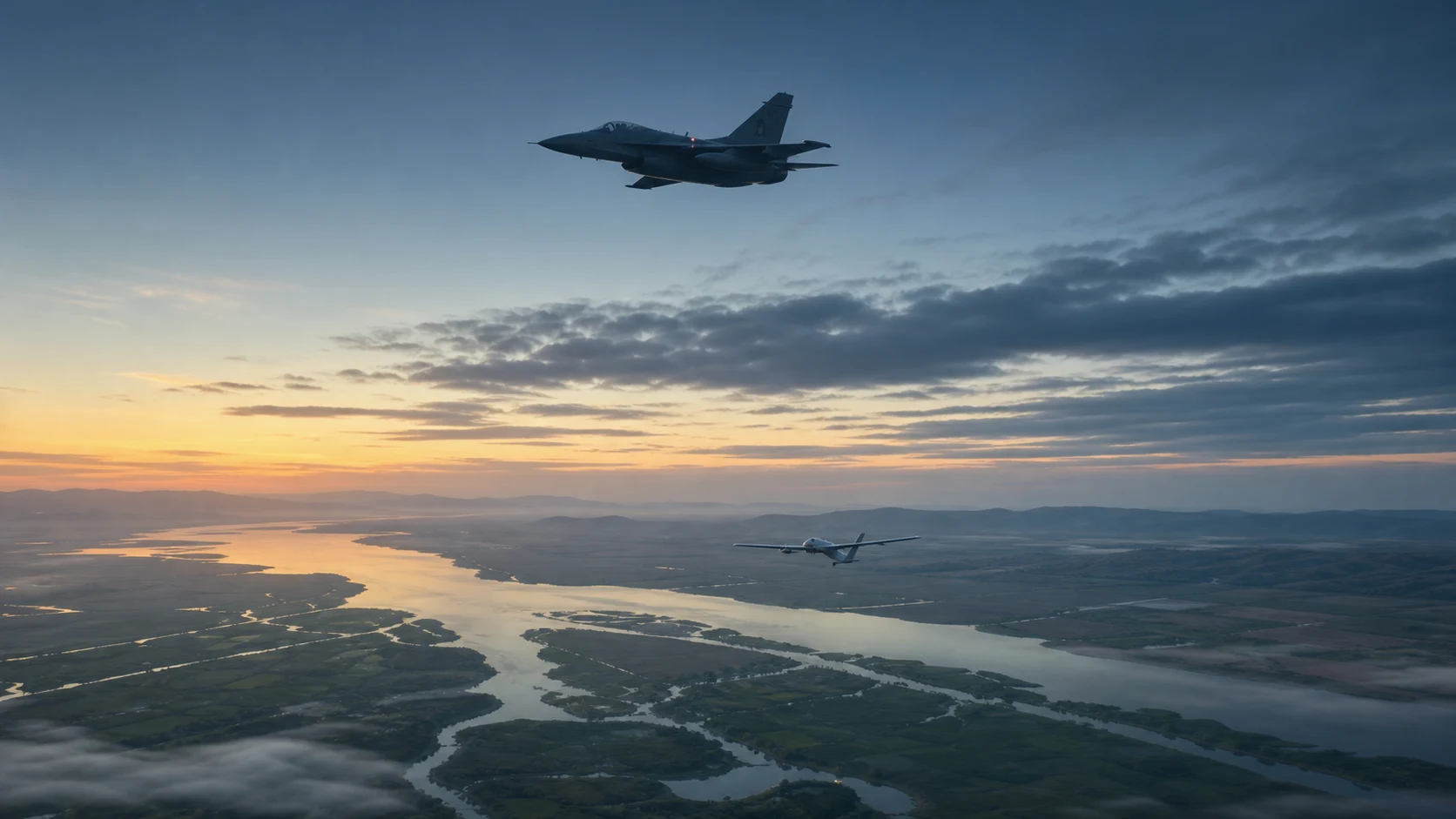
Romania’s Ministry of National Defence said radar detected a drone entering national airspace near the Ukrainian border at 08:22 on July 25. Two Romanian F-16s on air-policing duty intercepted the target, conducted standard identification and neutralization procedures, and shot it down safely in an unpopulated area. Recovery teams were sent to inspect the impact site. The ministry’s notice does not identify the drone’s origin or payload.[1,2,3,4]
Reuters, Euronews and the Associated Press report the same second shootdown. It followed Friday’s first Romanian downing after dozens of earlier incursions. Prosecutors identified Friday’s fragments as Russian, but Reuters says Saturday’s drone origin was not specified. Euronews reports that the defense minister said the impact site and wreckage remained under analysis.[2,3,4]
The response threshold is the decision delta
The ordinary frame treated repeated border incursions as a surveillance-and-alert problem. The new evidence is two consecutive shootdowns: Romania’s air-policing chain has now moved from detecting and scrambling to neutralizing a target when identification and location allow it. The mechanism is explicit—radar detection, F-16 interception, identification, then engagement over an unpopulated area. The exposed parties are Romania and NATO air-defense planners, border communities, civil aviation and operators of drones crossing the Black Sea corridor.[1,2,3,4]
The limit is that two incidents do not establish a new standing rule of engagement, a broader NATO policy or a change in drone-defense effectiveness. Saturday’s debris analysis, aircraft provenance, mission purpose and payload remain unresolved. The next checkpoint is the ministry’s forensic identification and any documented change in Romanian airspace procedures, followed by whether further incursions trigger the same response.[1,2,3]