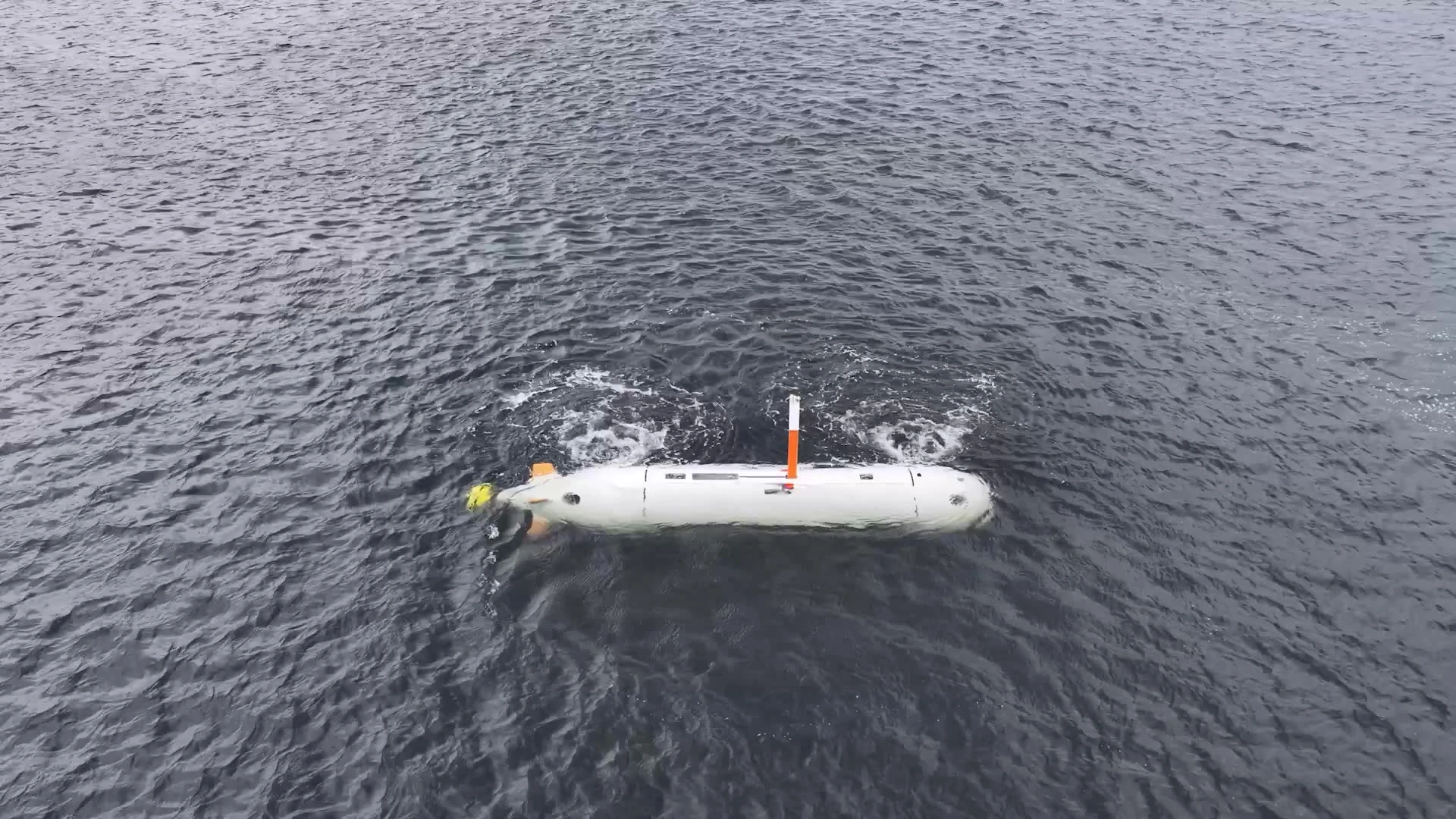
Sweden’s large uncrewed underwater vehicle has moved from a development contract to a physical demonstrator at sea. Saab said on 16 October that the vehicle had been built and launched, with successful sea trials completing the project’s first phase. The Swedish Defence Materiel Administration, known as FMV, separately confirmed the launch and identified further testing and evaluation as the next step.[1,2]
The milestone is a test platform
Saab describes the Large Uncrewed Underwater Vehicle, or LUUV, as a demonstrator for developing software, sensors and autonomous functions. It integrates the company’s Autonomous Ocean Core control system. Saab says the project will inform Swedish authorities’ decisions on future acquisition and operational use. That places the announced result before a decision to buy and field an operational capability.[1]
FMV’s account reinforces that distinction. It describes long-duration missions, surveillance and operations with or without human control as prospective capabilities. It does not publish a measured mission duration or an independently validated autonomy score. A vehicle being in the water establishes a different milestone from sustained service under an agreed operating requirement.[2]
Compare the records, not the speed claim
FMV announced the development-and-demonstration contract on 29 August 2025, when it expected initial sea tests to start in summer 2026. Its October update confirms progress beyond that contract. The two publication dates are 413 days apart; they do not establish when every contractual or technical milestone occurred.[2,3]
Saab’s latest release describes the work as taking less than a year after contract award. The earlier public contract announcement prevents treating that timing claim as an independently established development interval. The safer comparison is the documented sequence: a development contract, a launched demonstrator and initial trials, followed by further evaluation.[1,3]
What would turn progress into procurement
For buyers, the next evidence should connect the demonstrator to acceptance criteria: mission duration, intervention requirements, sensor performance and reliable recovery under specified conditions. These are our proposed checkpoints, not results reported by Saab or FMV. The reviewed announcements provide neither a production fleet quantity nor a service-entry date.[1,2,3]
The concrete advance is that Sweden now has a physical platform for testing its underwater autonomy plans. A subsequent evaluation result, acquisition decision or accepted operational delivery would move the programme another step. Until then, counting this demonstrator as a deployed fleet would erase the procurement work still ahead.[1,2]