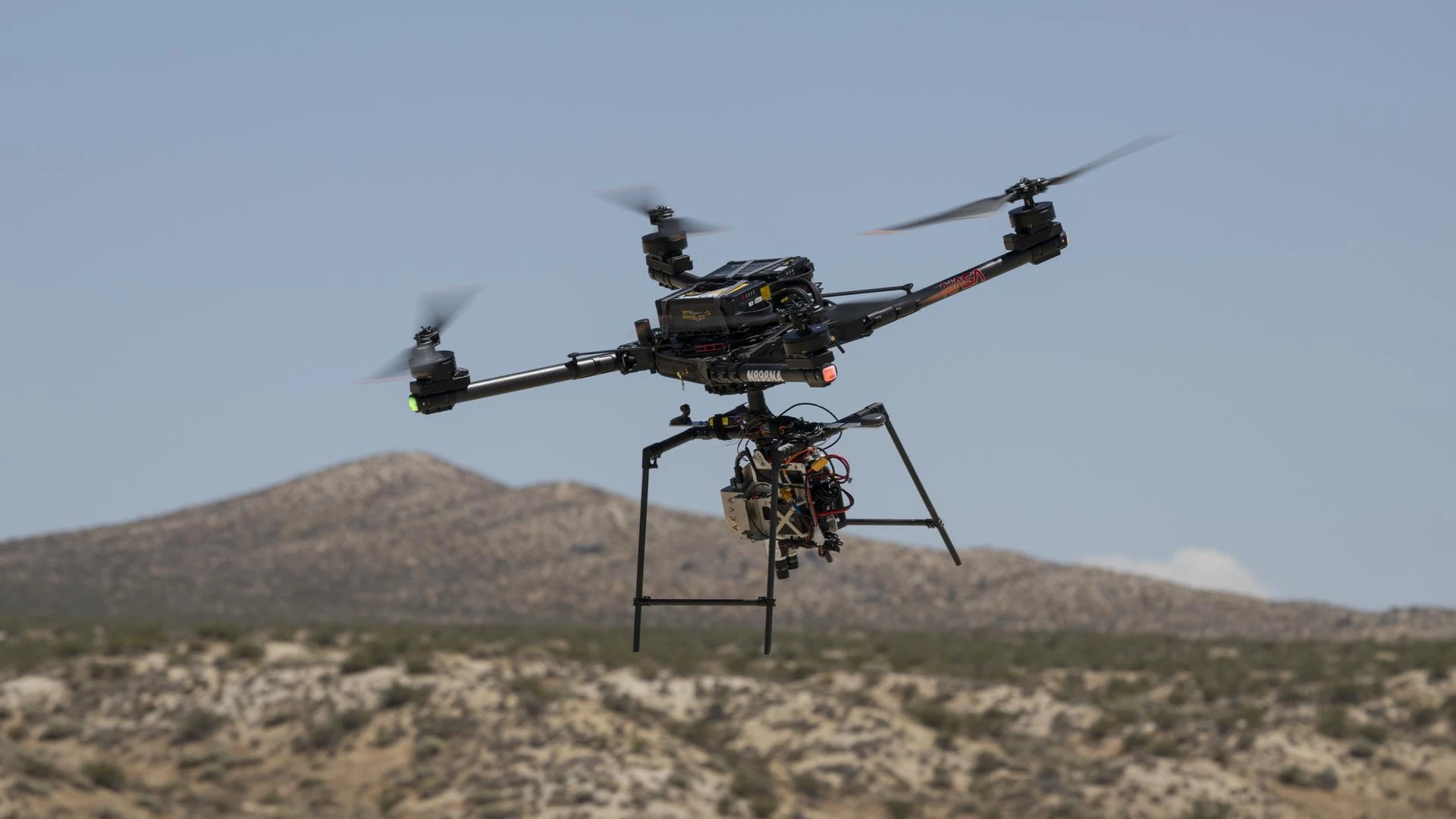
NASA’s November 4 account of its Safe and Precise Landing – Integrated Capabilities Evolution system, or SPLICE, describes an Alta-X drone completing simulated lunar descent and landing maneuvers on August 27. The new publication reports an Earth flight test, not a landing on another world or a newly completed November mission.[1]
The important engineering step is connecting perception to action. Detecting a rock is insufficient if the vehicle cannot choose another site and reach it. NASA describes terrain maps feeding hazard assessment and guidance that can divert toward a safer location. That is a control problem as well as a sensor problem.[1,2]
NASA’s project description separates the pieces: a camera compares surface features with stored maps; laser instruments measure motion and terrain; an onboard computer processes navigation and landing hazards. Guidance must produce a reachable trajectory while respecting vehicle constraints. These functions explain the integration challenge; their presence in the project does not prove every component flew in this drone configuration.[2]
The distinction has a long history. In October 2019, partner Draper reported that its terrain-relative navigation package identified features and maintained a navigation solution aboard Masten’s Xodiac vehicle. That earlier participant report establishes navigation work, not independent verification of the August 2026 trial or a matched improvement in landing accuracy.[3]
The current records also need careful reading. The November article refers to preparation for a test later that month, while the project overview lists August closed-loop testing at Voyager’s Mojave site and September project closeout. Those descriptions do not establish a new November test schedule. The announcement provides no attempt count, landing-error distribution, intervention record or matched baseline.[1,2]
For lander developers, the next useful evidence is the tested hardware and software configuration, trajectories, hazard scenarios, accepted touchdowns and failures. A terrestrial drone demonstration can expose integration problems before costly spacecraft trials. It cannot by itself establish performance under lunar gravity, lighting or propulsion constraints. The advance is a reported guidance test; dependable mission execution still needs its own evidence.[1,2]