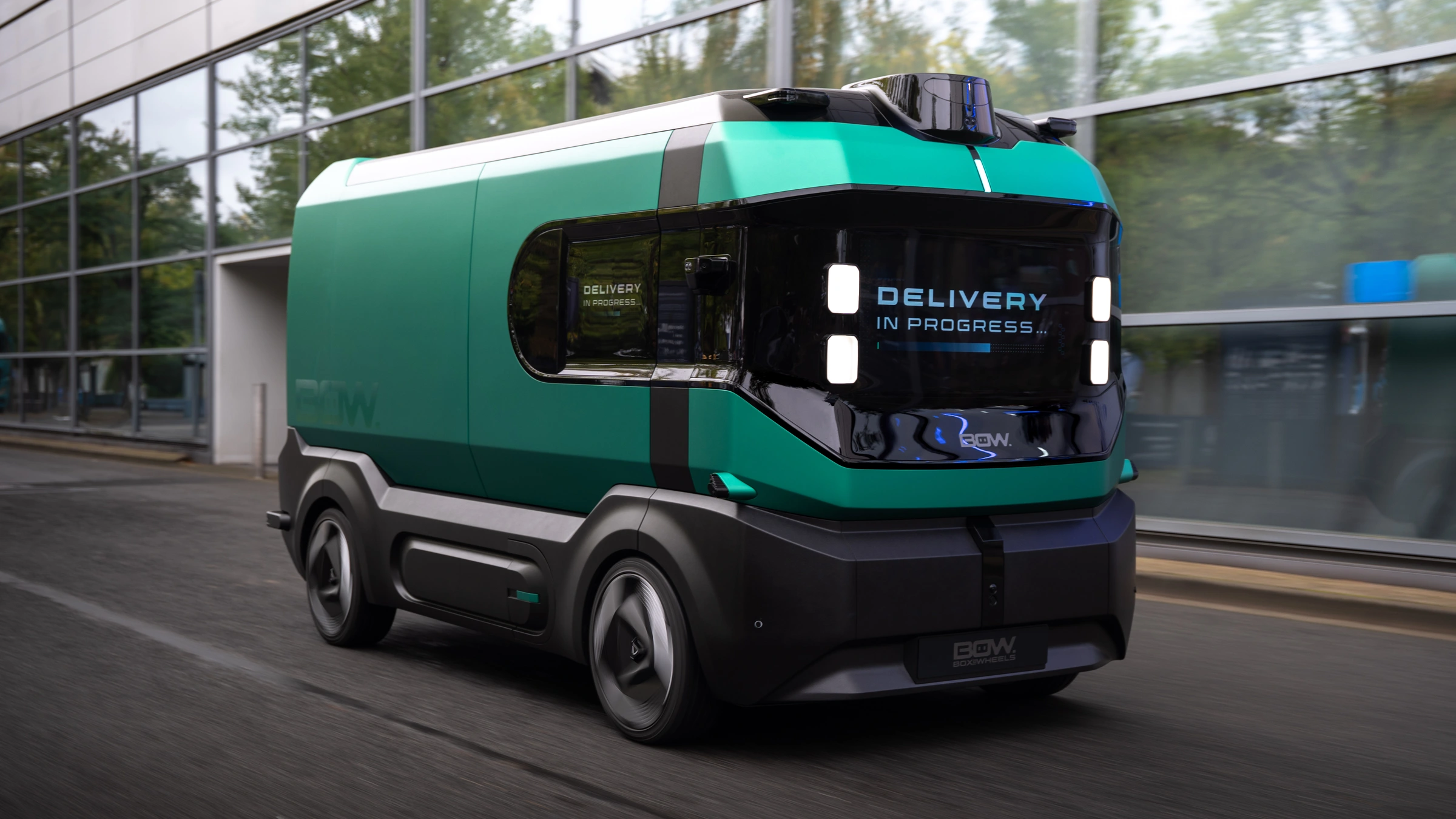
Stellantis Pro One unveiled BOW, short for Box-on-Wheels, on September 14 as an electric autonomous delivery concept developed with UQI Robotics. The reveal came on IAA Transportation’s press day in Hannover, before the September 15–20 public event. The organizer’s programme lists Stellantis at Hall 13, stand C41.[1,3,4]
Stellantis describes both a concept vehicle on its stand and an outdoor demonstrator. It identifies urban goods distribution and controlled environments, including factories, hospitals and airports, as intended uses. These are proposed operating settings; the release does not identify a BOW customer already running a delivery service.[1]
The more consequential detail sits in the September 11 collaboration announcement. UQI contributes autonomous-system, software and perception capabilities. Stellantis says it will adapt the solution for Europe and develop customer support, connectivity, fleet integration and business services. Initial European validation is intended to assess performance, customer value and scalability.[2]
Read together, the two releases move the story from a proposed collaboration to a displayed concept, while leaving the operating test open. They also identify where much of the deployment work will sit: with the vehicle supplier that must connect autonomous technology to a customer’s existing fleet and support arrangements.[1,2]
The announcements do not specify a BOW delivery date, price, named European validation customer, measured intervention rate or completed deliveries per vehicle. The September 11 text describes validation as both expected to begin and currently under way, without identifying the sites or results. The September 14 reveal does not resolve that distinction.[1,2]
There is a practical reason to watch the partnership. Giving Stellantis an explicit integration and support role could make procurement and maintenance easier for fleet buyers. That is a potential advantage of the proposed arrangement, rather than a measured BOW operating benefit. A demonstrator alone cannot establish how much human assistance a working route will require.[1,2]
The next useful checkpoint is a named European customer test that reports its route conditions, completed jobs, downtime and human interventions over a defined period. Buyers also need to know who handles failed deliveries and recovery. Those details would turn the announced division of responsibilities into an operating proposition they can assess.[1,2]