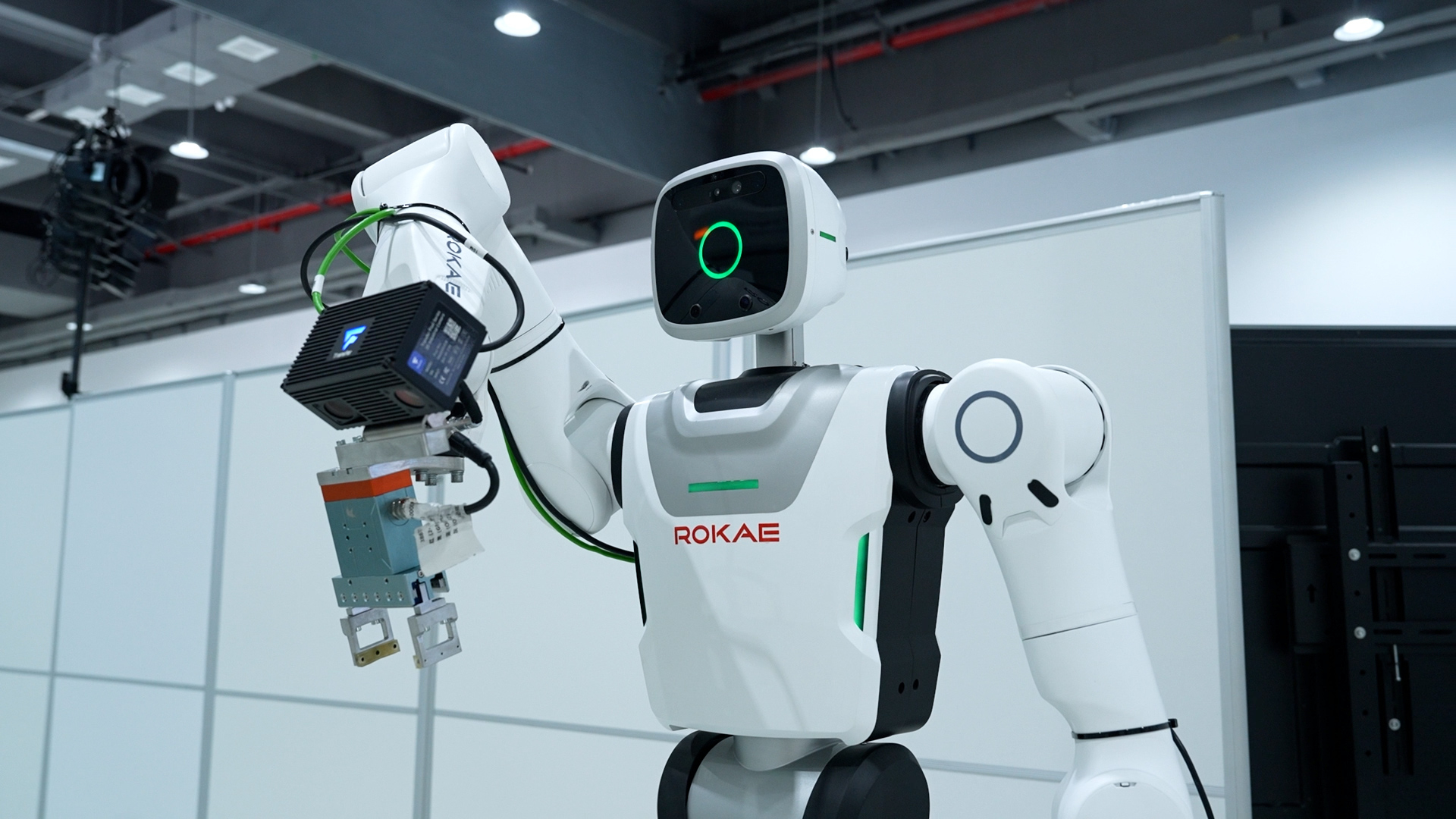
Schaeffler has opened a factory in Taicang, China, that combines assembly of humanoid robot components with robot training. Its20 October announcement describes six humanoids working across five stations, performing tasks from parts handling through inspection and packaging.[1,2]
The approximately 7,500-square-meter site also brings together training, data acquisition and a digital replica of the production line. Schaeffler says humanoids assemble joint modules, including actuators, the mechanisms that turn power into movement.[1]
The local government’s 2 September account already described Schaeffler’s Taicang robotics business supplying components and offering real factory environments for testing. The new announcement adds an opened site and a specified assembly arrangement to that earlier strategy.[3]
Gasgoo separately reported the opening on 20 October. Its account repeats the six-robot configuration; it does not supply an independent measurement of the line’s productivity.[2]
The practical change is that component production and robot learning now share a site. In principle, production tasks can generate training evidence, while the same line tests whether learned skills transfer into manufacturing. That gives customers a more concrete evaluation setting than an isolated demonstration.[1,3]
An opening and a robot count still do not establish repeatable production economics. The reviewed records provide no comparable accepted output per hour, first-pass yield, human-intervention rate or operating cost. Those measurements would distinguish a useful testbed from a process ready to reproduce across factories.[1,2]
Schaeffler says sensors record assembly accuracy, task duration, energy use and equipment condition. Publishing results for repeated batches, together with the human support required, would let prospective users judge the line on the work it completes.[1]