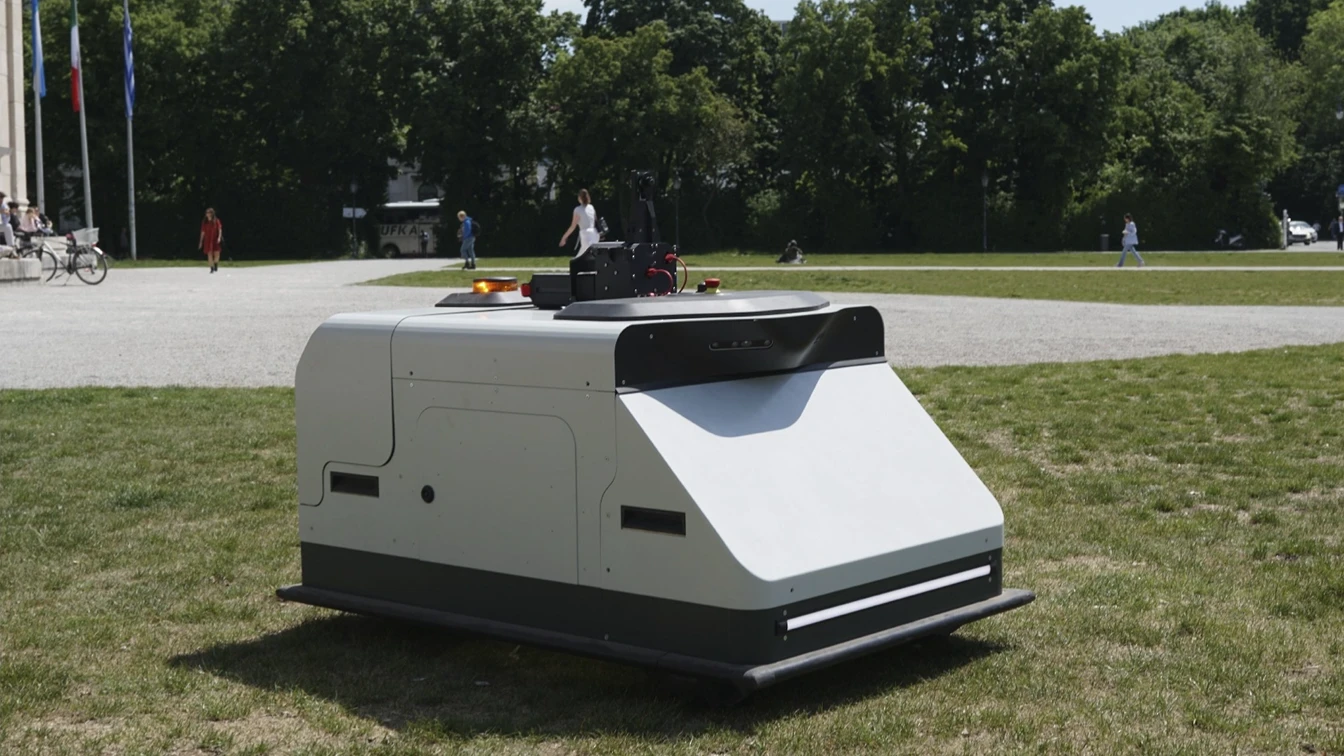
A study published on November 13 in Frontiers in Robotics and AI shows why two counts from one cleaning run can tell different stories. The work first appeared as a September preprint. The new journal version offers a peer-reviewed account of the trial, which took place in a public park in Munich.[1,2]
During one 41-minute run, an Angsa robot recovered 16 of the 23 pieces of litter the research panel had placed. It missed seven. The team attributed many misses to detours around people and also found bottle caps that the vacuum could not lift from the grass.[1]
For the same run, the robot’s log counted 219 items across a wider area that included existing litter. The authors say the classifier also counted some objects resembling cigarette butts, including decaying leaves. The larger count measures logged workload over a different area; it cannot be used to calculate the share of planted litter the robot recovered.[1]
Buyers can put both measures in a trial specification. Deutsche Bahn’s 2018 cleaning robot trial at Berlin Central Station used a defined 200-square-metre course and scored cleaning, navigation, reactions to obstacles and operating safety separately. For a park trial, a buyer could likewise fix the test area, record recoveries and misses by surface, and log the rest of the route separately.[1,3]
The Munich run does not establish performance across shifts or in other parks. A useful next check would repeat the test across grass and gravel, with and without pedestrian traffic, and record when an employee has to intervene. That would give a buyer a better basis for deciding which routes to automate first.[1,3]
The cover shows the Angsa machine in the study’s Munich park setting. The photograph is cropped from Figure 3 and used under Creative Commons Attribution 4.0.[1,4]