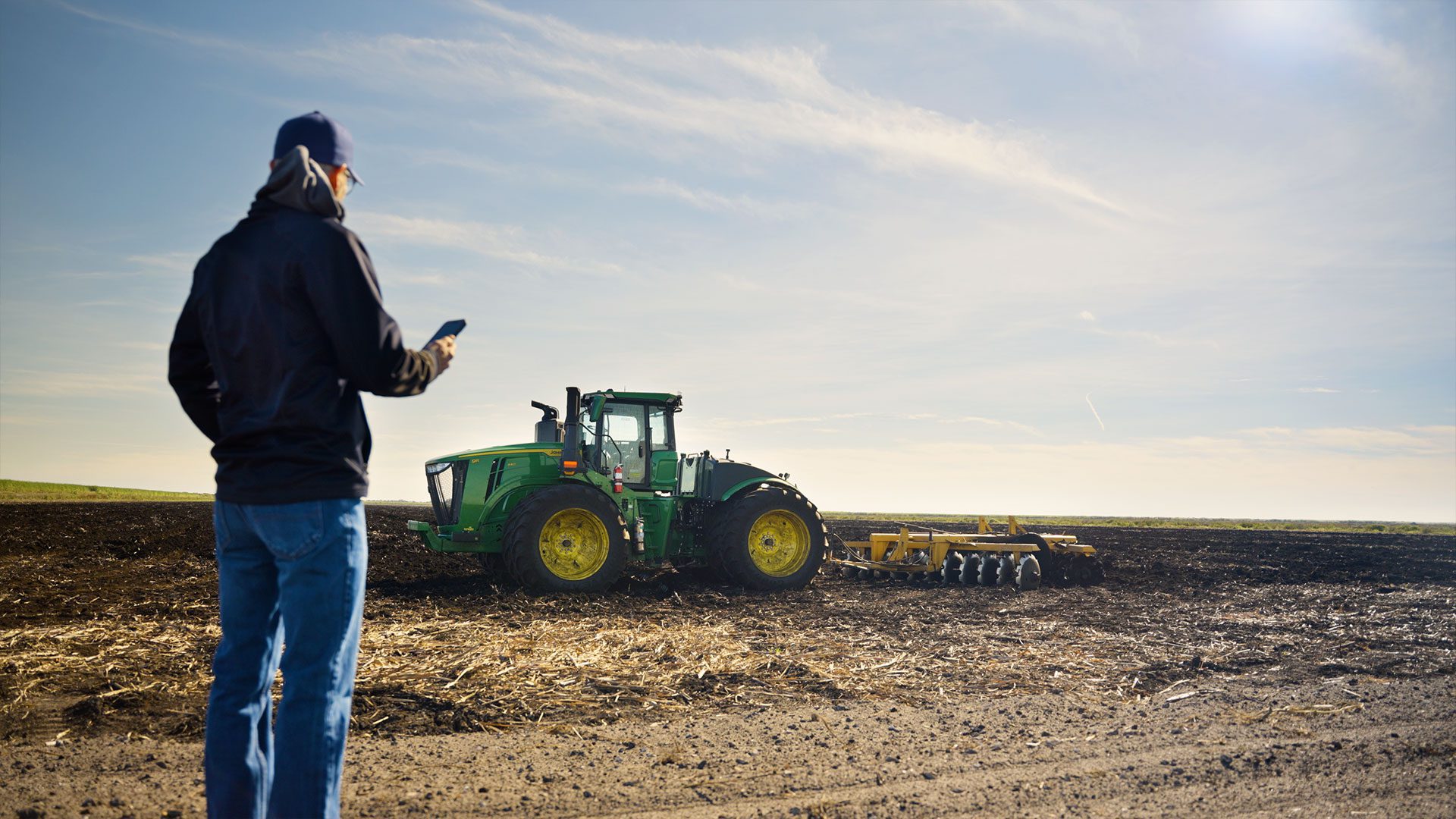
A five-tractor fleet is now doing field work
U.S. Sugar says it has moved from an 18-month development pilot to a commercial deployment of five autonomous John Deere tractors in South Florida: four 8R Series machines and one 9R Series machine. The tractors are working on sugarcane land preparation and cultivation across a farming operation that spans 255,000 acres. ASI’s Mobius fleet-management platform provides central oversight, with one operator supervising multiple vehicles.[1,2,3,4]
The operating claim is narrower than a general-purpose autonomy story. The current work is repetitive, field-based tillage and cultivation, and the companies say the tractors can run up to 24 hours a day, seven days a week. U.S. Sugar also says it is retraining current employees for autonomous-operations and other technology roles, so the deployment shifts the labor model toward supervision and technical support rather than removing the human operating layer.[1,2,3,4]
The retrofit and control layer carry the story
ASI’s case study describes a retrofit rather than a clean-sheet robot: the autonomy kit connects to each tractor’s existing drive-by-wire system, while the platform uses U.S. Sugar’s GPS towers, field maps and data networks. The same account says the system controls disc raise-and-lower sequences, travel speed and fuel consumption, and returns camera and sensor data to the command station. In operator terms, the purchase is not just five autonomous vehicles; it is a field-control stack tied to existing equipment and a local dealer service network.[2,5]
That makes this a useful deployment boundary. The evidence shows a named customer, a named task, a disclosed unit count and a central supervision model. It does not show that the tractors are unattended, that one operator can safely manage the full 255,000 acres, or that the system has achieved a particular return. The reported 24/7 capability describes an operating design; it is not a published utilization or uptime measurement.[1,2,3,4]
The next proof point is repeatability
The public pages reviewed do not provide uptime, intervention frequency, maintenance hours or cost, hectares per tractor-hour, fuel savings, labor denominators or payback. They also do not separate how much of the 255,000-acre footprint is currently served by the five-tractor fleet from the decade-long expansion plan. The next measurable checkpoint is a season of disclosed operating logs: hours worked, exceptions requiring human action, maintenance burden and output per machine compared with a manually operated baseline.[1,2,3,4,5]
U.S. Sugar says the technology will eventually extend to its full farming operation and potentially to sweet corn and green beans. Those are plans, not completed scale. For now, the decision-changing evidence is that a large agricultural operator has put a retrofit autonomy and supervision layer into a real field workflow; the economics remain an operating question for the next crop cycle.[1,2,3,4]