What happened
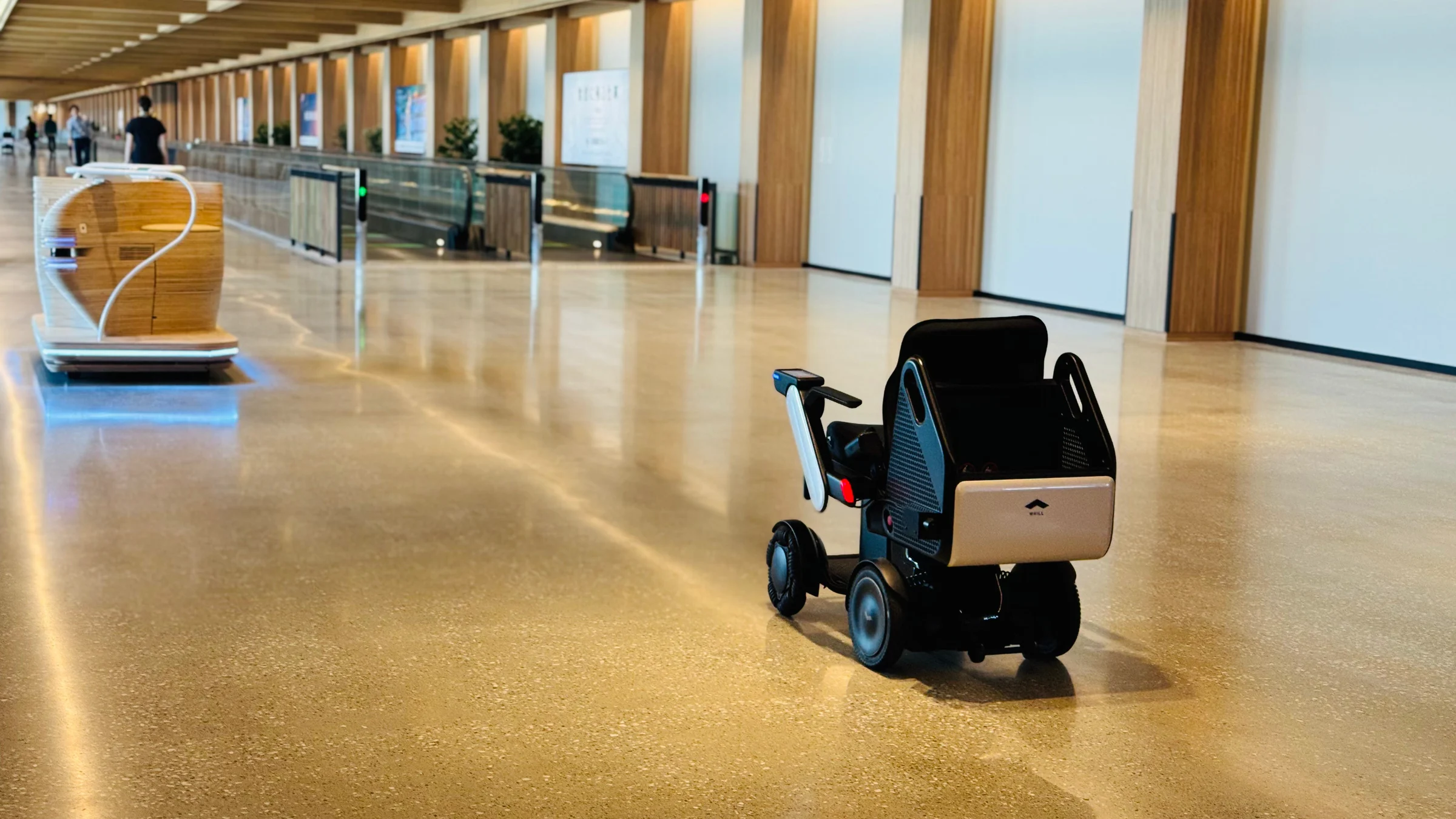
WHILL said August 25 that its autonomous mobility service at Tokyo’s Haneda Airport will extend to Terminal 1’s North Satellite when that facility opens on September 1. Japan Airport Terminal, the airport operator, says the satellite adds six fixed gates and a roughly 200-meter connecting corridor. The operator will also introduce a new iino autonomous mobility model in the satellite, making the expansion an operating environment for more than one kind of mobile machine.[1,3,5]
This is an expansion of an operating service, not a first airport demonstration. WHILL’s Japanese release reports 36 units across Haneda’s Terminal 1 and Terminal 2 domestic areas and Terminal 3 as of August 25, with average usage around 10,000 rides per month; its English release describes 37 units across those terminals. The Japanese release separately says 12 units are already operating in Terminal 1. WHILL does not explain the one-unit difference between the two language versions.[1,2]
What the evidence shows
Haneda’s current service page shows the operating boundary. The autonomous wheelchairs run in departure areas of Terminals 1, 2, and 3, generally from 8 a.m. to 8 p.m. in the first two terminals and noon to 6 p.m. in Terminal 3. The service is free and does not accept reservations, and the page says it is unavailable during a 1 p.m. to 3 p.m. maintenance window. That is a real public service with a defined schedule, not unrestricted autonomy across the airport.[4]
The operating system is larger than the chair. WHILL’s service documentation describes real-time tracking of device location, battery level, availability, and diagnostics, alongside facility mapping, staff training, boarding protocols, and regular device checkups. The device can drive to a selected destination and return unmanned after the passenger exits, but people still own the station, eligibility, dispatch, maintenance, and exception-handling work around it.[1,6]
The new deployment boundary is shared space. WHILL says cooperative fleet management, previously used between WHILL devices, is being extended to autonomous robots made by other manufacturers. Japan Airport Terminal and independent travel outlet Traicy both place WHILL and the new iino vehicle inside the North Satellite plan. The public record does not yet establish that a third-party vehicle is already sharing the existing WHILL service route, nor does it disclose uptime, manual interventions, fault recovery, labor savings, or cost per ride.[1,2,3,5]
What to watch
September 1 is the measurable checkpoint: whether the North Satellite route runs on schedule under passenger density, whether the reported monthly ride volume holds as the fleet changes, and whether WHILL and other autonomous vehicles can share the new corridor without extra manual control. The service page already makes maintenance a visible operating constraint, so the useful proof will be route availability, missed rides, interventions, battery swaps, and service workload—not another launch photograph.[1,3,4,6]